
Right-wing operatives unleashed a firestorm inside the Capitol halls this week.
For weeks, a bill that would strengthen privacy protections for immigrant service workers stirred controversy online among some conservatives over fears that it would stifle First Amendment rights before it was taken up at a committee hearing this week.
Assembly Bill 2624 expands on a 25-year-old state protection program that allows victims of sexual assault and domestic abuse to keep their residential addresses confidential by providing a substitute mailing address to the secretary of state’s office.
The legislation by Assemblymember Mia Bonta would broaden the eligibility to include people who provide legal, health or other social services to immigrants and ban their private information from being shared online if intended to incite harassment or violence if they are in the program. Violations would be a civil offense and give those affected the right to sue.
However, it has spurred anxiety among Republicans over concerns that it would stop independent ‘citizen journalists’ from investigating fraud accusations. The pushback has included calls from GOP lawmakers for a special session on the issue and ire from non-Californians such as Texas Sen. Ted Cruz and Trump administration officials.
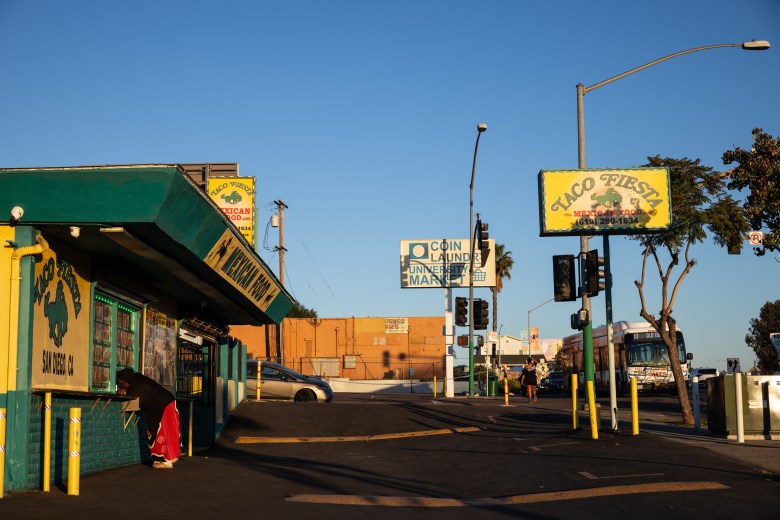
Republicans have coined it the “Stop the Nick Shirley Act,” although the bill does not name the conservative activist and content creator whose videos about Somali-operated Minnesota day care centers spurred an immigration crackdown in Minneapolis. Shirley also visited several Somali-run day care centers in San Diego where he accused owners of running “ghost facilities” with no children present.
At a public safety hearing earlier this week, immigrants rights groups advocates filled the room and the testimony overwhelmingly supported the bill. It’s intended to protect workers who help immigrants from being targeted, but many advocates were rattled.
“I fear that people may come after me or my family because of my affiliation with this effort,” said Aydee Rodriguez, a fellow at the Women’s Foundation of California.
Assemblymember LaShae Sharp-Collins of La Mesa, who sits on the committee, said she supports the bill because “no one should fear walking out of their home.”
There was opposition, though. A self-described independent journalist echoed concerns it would curtail investigative journalism. Palmdale Assemblymember Tom Lackey, a Republican, said he couldn’t back the bill because of how it’s been interpreted by outsiders.
“It shows this bill is not clear,” he said about claims the bill would limit what journalists could share online. “Maybe it’s clear in your intent, but the application needs help if there’s this much attention being drawn and accusations that it represents something that you say it doesn’t claim.”
It passed the committee 7-2 along partisan lines.
Bonta’s office maintains that the bill language is clear and that the proposal would not affect journalists.
The fiasco is the latest flashpoint amid a nationwide Republican push to scrutinize Democrats over alleged widespread social services fraud. In California, the message has been politically potent ever since the state was found responsible for paying billions of dollars in fraudulent unemployment insurance claims during the Covid-19 pandemic.
“For voters that are fiscally motivated, they do believe the fraud exists, and they do want to stop it,” GOP political consultant Matt Rexroad said. “And so, for Republicans, who are pushing that effort, it’s a direct effort to not only appeal to their base, but independents love it and some Democrats believe that fraud exists on a large scale.”
It’s led to bills seemingly unrelated to fraud such as Bonta’s being pulled into a deliberately misleading political messaging ecosystem claiming corruption and First Amendment violations that she said have led her office to receive death threats.
Separately, another proposal First Amendment groups are worried about, Assembly Bill 1821, is snaking its way through the Legislature.
It would give public agencies more time to respond to public records requests, from the current 10 calendar days to 10 business days.
It advanced from committee last week after its author, Assemblymember Blanca Pacheco of Downey, removed a language that would have allowed agencies to charge the public unspecified amounts for time spent fulfilling requests.
Pacheco said that Downey and other cities have received an increasing number of requests over the past two decades that have cost the city hundreds of thousands of dollars in employee time.
“Regardless of the intent, requests at this scale require significant time and resources to process,” Pacheco said at committee hearing last week. City and county governments back the bill and groups such as the League of California Cities have said it will stop people from abusing requests, which can cause delays for other requests.
First Amendment and civil liberties groups initially worried that the proposed law would dissuade people from filing public records requests due to prohibitive costs.
David Loy, legal director of the First Amendment Coalition, said that dropping the fees was an improvement but the deadline extension could also result in delays, meaning some requests would never be completed.
“Time is of the essence,” Loy said. “Documents delayed are often documents denied.”
In Other News
Democrats advanced a bill that would disqualify federal immigration agents who started work during the second Trump administration from becoming local or state police officers.
It’s the latest piece in a package of legislation taking swings at the Trump administration’s immigration crackdown, although attempts with similar laws have had limited success. A federal appeals court on Wednesday struck down a 2025 law that forced federal agents to identify themselves.
Other bills, such as the one that advanced this week and another that would make it easier to sue agents for civil offenses, are expected to face similar scrutiny should they become law.
What I’m Reading Now
Is San Diego on the right track with Mayor Todd Gloria’s proposed budget cuts? The San Diego Union-Tribune asks economists to give their take.
Black students at elite Southern California campuses navigate a rise in racist incidents, the Los Angeles Times reports.
The Trump administration and congressional Republicans hone in on hospice fraud in California during a special hearing on Medicaid fraud, from The New York Times.
They obviously wouldnt need to be concerned about privacy if they werent involved with fraud. If you receive tax dollars for an enterprise it should come with the expectation of transparancy on your part. This issue wasnt an issue until the fraud videos came out. Somebody doesnt want to get caught and the fact many of them are immigrants is apalling.
I disagree, privacy protects the children, their families, and the staff. I don’t want random people entering my child’s place of care/education and stirring things up. If that is not bad enough the random person was clearly had a racially motivated agenda and no regard for the effect of their actions on the people who use the service. If fraud is suspected it should be reported to the appropriate agency with qualified investigators.