
This post has been updated.
On the morning of May 18, two young men drove to the Islamic Center of San Diego and murdered three Muslim community members with the expressed desire – undoubtedly adopted from extremist internet forums – of perpetuating violence against non-white people.
The online coverage followed a grimly familiar script: news clips of grieving families, outraged commenters, videos of public officials solemnly speaking into microphones. But people who were angry about what happened soon found what may have seemed like an unusual target: San Diego Mayor Todd Gloria.
“Your presence is unwelcome here,” said Manalle Abdallah, 30, a member of the Islamic community with family ties to the mosque.
The clip of Abdallah demanding the mayor’s departure spread quickly.
“Everyone was crying and hysterical, and I was just mad,” she said.
The mayor was caught off guard. His security team escorted him away. But for many local Muslims, Abdallah’s anger at the mayor wasn’t surprising. Some even told her it was cathartic.
What the larger community may not have known is that tensions between the city and its Muslim and Arab communities had been mounting for years.
Much of it goes back to local officials’ lopsided attempts at wading into the Israel-Palestine conflict in the wake of Oct. 7. The mayor and others went above and beyond to express their support for Israel. But people with ties to Palestine said their pain continues to be ignored.
Meanwhile, the government bodies most qualified to handle these kinds of complex cultural conflicts – the city and county’s human relations commissions – have further inflamed local tensions. Their attempts have led to numerous resignations, the suspension of a commission and the awkward handling of a resolution to define antisemitism that’s prompted calls for a city investigation.
The result is a string of symbolic actions that have only further divided commissioners, as well as the communities they represent.
An International Conflict Hits Home
On Oct. 7, 2023, Hamas attacked Israel, killing 1,200 people and abducting 251 hostages in the largest single-day loss of Jewish lives since the Holocaust.
The attack hit home for the local Jewish community, which totals about 100,700 people across San Diego County and is also the target, persistently, of hate crimes.
The mayor responded swiftly, showing how much support he could rally for a community.
Gloria led vigils for the victims and was quick to acknowledge the tragic death of Ofir Liebstein, the mayor of Shar’ar Hanegev, San Diego’s sister city in Israel. Three days later, he illuminated the Convention Center in blue lights to symbolize the city’s solidarity with Israel. His support created lasting memories for Jewish people traumatized by the attack.
In 2025, Gloria joined a group of Jewish organizations in boycotting San Diego Pride after accusing Kehlani, the festival’s headliner and a vocal supporter of Palestine, of making antisemitic comments.
Many local Muslims wondered where that same energy was for their trauma – the more than 73,400 Palestinian people who have been killed along the Gaza Strip as a result of Israel’s response to Oct. 7.
“We never got a call from Gloria that said, ‘We know the Jewish community is hurting, but how are you guys doing?’” said Tazheen Nizam, executive director for the local chapter of the Council on American-Islamic Relations.
There are about 60,000 people of Arab ancestry living in San Diego County, according to a Majdal Arab Community Center analysis of Middle Eastern census data. Muslim people make up less than 1 percent of the local population.
The relationship between these communities and the city was already strained before Oct. 7.
In 2019, the Muslim community came under direct police surveillance by the city’s network of streetlight cameras. Their efforts to advance greater surveillance transparency a few years later were ignored.
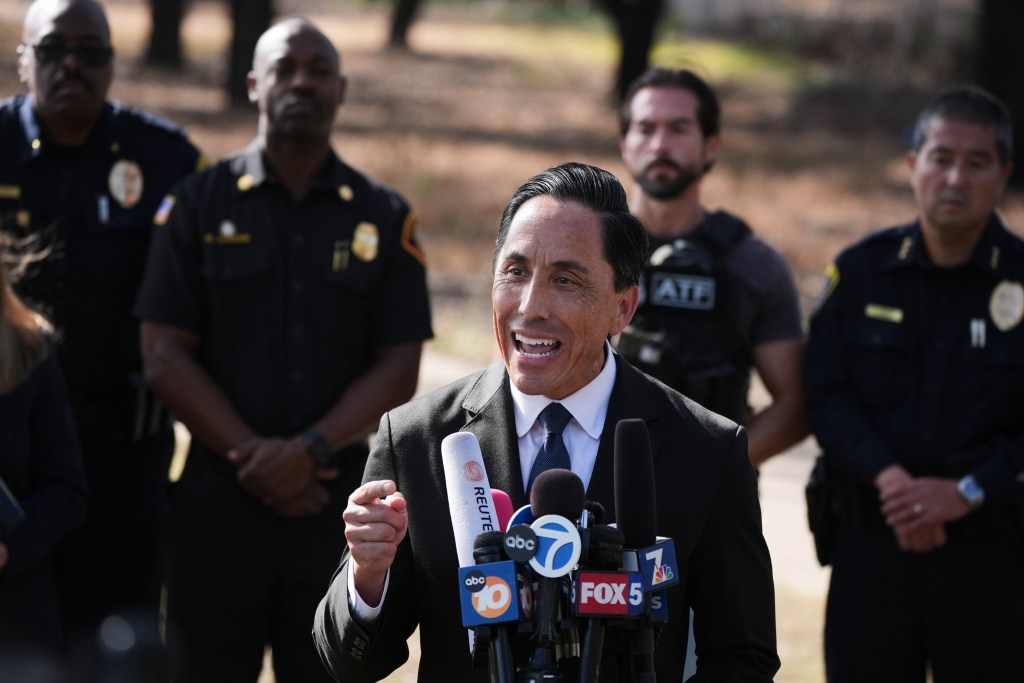
On the day of the shooting, Gloria frustrated many in the community by lauding the police and defending their budget.
“(San Diego Police) didn’t prevent the shooting, even though they knew that these people were on the loose hours before,” said Pillars of the Community President Khalid Alexander. “They didn’t even catch the shooters.”
Gloria’s office rejects the notion that he’s failed to engage with the Muslim and Arab communities, but said they are open to having more conversations with them.
“The Mayor has maintained relationships with community leaders, attended community events, commemorated important cultural and religious observances, and supported these communities when they have faced discrimination or acts of hate,” said Joya Patel, a spokesperson for the mayor. “Engagement has occurred both directly through the Mayor and through senior members of his administration.”
Defining Hate
Any local faultlines that existed on the question of Israel and Palestine were fully cracked open in March, when the San Diego City Council adopted the International Holocaust Remembrance Alliance’s definition of antisemitism.
The definition, which is non-legally binding and has been adopted by nearly 100 government entities across the United States, states: “Antisemitism is a certain perception of Jews, which may be expressed as hatred toward Jews.”
For most opponents to the definition, the issue wasn’t its top-line characterization of antisemitism, but the conflation of some criticisms of Israel with a hatred of Jewish people. Of the 11 examples of antisemitism included with the definition, seven mention Israel.
“Claiming that the existence of a State of Israel is a racist endeavor,” for instance, is considered antisemitic under this definition.
“We thought it was very important that we at least have some kind of educational resource tool to define what antisemitism is,” said Ryan Darsey, deputy chief of staff for Councilmember Stephen Whitburn, the office that would eventually bring the definition to the City Council.
“This is not a guide to enforcement,” he added. “It’s not used to make decisions.”
This decision, while largely symbolic, was clearly meaningful to the Jewish community members who crowded into the council chambers to support the resolution and share their personal experiences with antisemitism. The meeting also featured numerous distressing hate comments, including at least one that said hate crimes against Jewish people are justified.
But the question of whether it is fair to conflate criticisms of Israel with a hatred of Jewish people remains fraught, both within the Jewish community and outside of it. It is hard to imagine any local resolution referencing the state of Israel getting by without controversy, even under the fairest of circumstances.
So, knowing this, the city attempted to dodge the Israel question entirely.
‘It Seemed Very Out of the Blue’
The Muslim and Arab communities would not become aware of the City Council’s consideration of the IHRA definition until March 17, about one year after it was first brought to the city’s Human Relations Commission by Stand With Us, a non-partisan group dedicated to fighting antisemitism and supporting the state of Israel.
The commission supported it unanimously, and it was eventually picked up by Councilmember Stephen Whitburn’s office.
Before becoming aware of the IHRA resolution, the Muslim community was already planning to show up to the March council meeting to celebrate a proclamation that Councilmember Sean Elo-Rivera placed on the agenda to recognize Ramadan, a sacred month celebrated by Muslims which would end the day after the meeting.
“But all of the sudden, when the agenda was released, (the Ramadan proclamation) was on the morning agenda, and they added the IHRA definition to the afternoon,” said Nizam from CAIR.
“It seemed very out of the blue,” she added.
The commission’s actions are no secret – all of its meeting materials are publicly available – but there was no effort to formally consult Muslim and Arab community members about this definition before the day of the vote, according to meeting minutes and Commissioner Nicole Murray-Ramirez.
“I did not talk to officials of the Muslim organizations,” Murray-Ramirez said during a phone call with Voice of San Diego.
“I was already aware, as you are, of their opposition to it,” he added.
On March 11, the resolution was added as an amendment to an already published meeting agenda. This sparked a week of frantic correspondence as Nizam and other community members tried to convince the City Council to consider alternatives, such as the Jerusalem Declaration on Antisemitism.
This definition is favored by many anti-Zionists for explicitly protecting speech that criticizes Israel and supports Palestinians, but has been condemned by groups such as the American Jewish Committee.
This onslaught of emails and phone calls caused some commissioners who previously supported the item to get cold feet.
At 9:15 a.m. on the day of the vote, two commissioners sent a letter to the City Council expressing their reservations without consulting the other commissioners.
“While public comment and posting requirements were followed during this process, it has become clear that the (Human Relations Commission) may have benefited from hearing multiple perspectives before making such an impactful decision,” reads a letter submitted by commissioners Tyler Duncan and Rickie Brown.
“I believe this can be remedied by inviting three additional experts, representing fields such as Holocaust history, Middle Eastern studies, academic freedom, freedom of speech, and diverse religious leadership, to provide further insight on this topic.”
Multiple councilmembers opposed this request to send the definition back to the commission, including Councilmember Whitburn, who said it would be redundant following the day’s four hours of heated public testimonies.
“Of course, when you do something like a resolution, you always look at what people that oppose it might say,” Darsey from Whitburn’s office said. “We definitely did our due diligence on that.”
The letter also sparked a lasting schism within the commission.
On June 17, the commission considered requesting a city investigation into whether the letter constituted a Brown Act violation because its authors spoke without consulting the full body. This motion remains stalled with a tied vote.
“We did not do due process,” commissioner Brown said during the June 17 meeting. “We did not bring it to the community. And for me, I feel like I did what I was supposed to do to make myself accountable to the community that I am sat on this (commission) to help and have their voice heard.”
Murray-Ramirez had a different perspective.
“All due respect to these commissioners, they can say what they want, but they were definitely pressured into changing their minds,” he said.
“This resolution just didn’t fall out of the sky,” he added. “This resolution was proposed and adopted by the Council and supported by the mayor.”
Duncan and Brown did not respond to requests for comment on this story.
‘I am Appalled Right Now’
So, if the commissioners didn’t consult a diverse pool of perspectives, who did they consult?
At least one of the Stand With Us representatives who pitched the definition to the commission in March 2025 had, in the words of Councilmember Elo-Rivera, an “extreme, MAGA, right-wing” record.
An Instagram search revealed that Staci Wax, one of the presenters listed on the meeting minutes, was pictured at the Kennedy Center with Health and Human Services Secretary RJK Jr. during the “Melania” movie premiere in January. Wax has since turned her account private.
“I don’t know that (the commissioners) would’ve received that the same way if they knew the political context for how it was being brought there,” Elo-Rivera said. “I don’t think they had a full understanding. I definitely don’t think they understood that there are other options out there.”
There was no Muslim or Arab representation on the commission until the appointment of Abdifatah Moalim, a Somali Muslim, a few days after the commission sent the resolution off to Whitburn’s office.
If he had been on the commission during the IHRA vote, Moalim said he would’ve opposed it.
“I believe that maybe the Jerusalem (Declaration) would have been the better choice here,” Moalim said in a phone call with Voice of San Diego.
Councilmember Elo-Rivera also took issue with the commission’s failure to consult Jewish voices that were opposed to the definition – including his own.
“It was deeply frustrating that this recommendation came forward without any conversation with me, one of the two Jewish members of this body,” Elo-Rivera said from the dais during the IHRA vote.
These process questions led to a heated exchange between Elo-Rivera and Murray-Ramirez.
“We met privately, publicly and individually with people on both sides of this issue,” said Murray Ramirez, contradicting a later statement where he clarified that Muslim community leaders were not consulted.
“We did our duty, and we covered every type of opinion, every input we could get.”
In the end, Elo-Rivera was the only councilmember to oppose the resolution.
The Finest Community Coalition, which advocated for the IHRA definition and is composed of at least 48 Jewish organizations and allies, declined to comment on the process under which the definition was adopted.
In a statement following the decision, the coalition wrote: “The IHRA definition is not a political or legal weapon; it is an educational resource. It provides an internationally accepted baseline that can shine a light on places where antisemitism might exist.”
The final IHRA resolution also included an addition from Councilmember Whitburn asking the Human Relations Commission to “address and define additional forms of racial discrimination and hate.”
On June 17, the commission approved a motion to explore additional anti-hate definitions, including a resolution defining Islamophobia.
The Fall of a County Commission
It’s not hard to understand why San Diego’s human relations commission would want to skirt around the Israel question.
Just look to the county’s human relations commission, which was placed on an indefinite suspension a few months after Oct. 7.
The tensions took hold about a year prior, when then-commissioner George Khoury called Israel a “racist, fascist state” while reflecting on the 75th anniversary of the Nakba, referring to the violent displacement of Palestinians during the founding of Israel in 1948. A few months later, commissioner Khaliq Raufi resigned in response to backlash after he said the Torah specifically teaches Jewish people to “kill Palestinians.”
Then, in early 2024, county supervisors were thrown into the fray during a vote on whether to reappoint Islamic Center Director and Imam Taha Hassane to the commission. In a sermon a few weeks after Oct. 7, Hassane said “resistance when people are occupied becomes a human right,” a claim some said was antisemitic.
The commission was suspended shortly after.
This history was front of mind for Murray-Ramirez while pushing the city to adopt the IHRA definition of antisemitism.
“Having worked 35 years to get the county to reinstate the county Human Relations Commission and see it, to this day, disbanded, because of the antisemitic hate that came in statements from Muslim leaders, that is the experience that I’ve had,” he said.
“Am I saying that all of them are (antisemitic)? Absolutely not.”
The State of Hate
There is another person who’s central to the events outlined above – from the county Human Relations Commission saga to the recent shooting at the Islamic Center of San Diego: John T. Earnest.
In March 2019, Earnest attempted to burn down a mosque in Escondido. This was one month before he murdered one woman and injured three others at the Chabad of Poway.
Earnest’s antisemitic and anti-Muslim motivations were detailed in a manifesto posted shortly before the attack. In 2021, he was sentenced to life in prison for both acts.
Murray-Ramirez said he struggled for decades to garner enough votes to reinstate the county commission, but was eventually able to revive it in the wake of the Poway shooting.
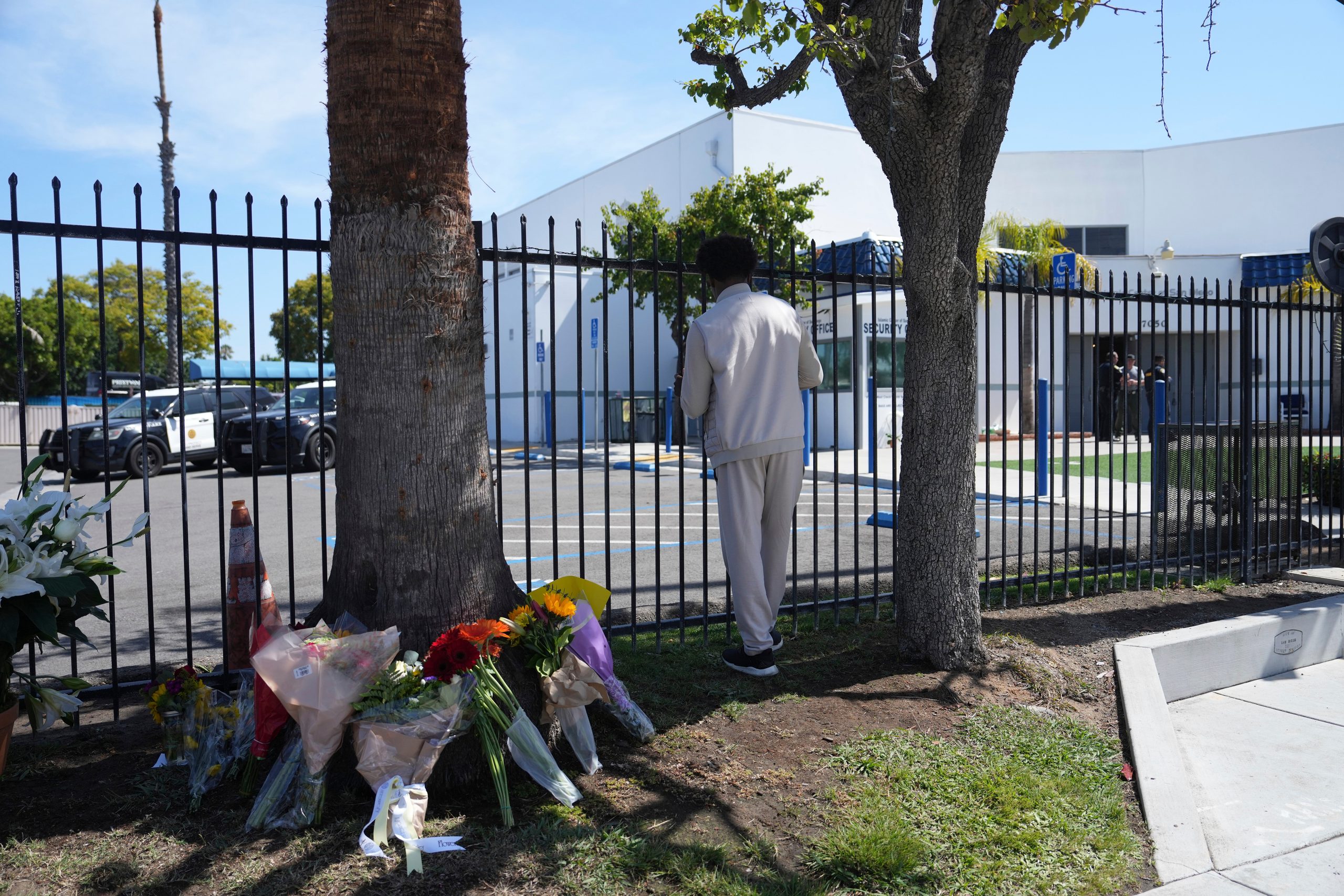
This year, Earnest’s name reappeared in the manifesto of the two young men who attacked the Islamic Center on May 18, killing security guard Amin Abdullah, mosque caretaker Mansour Kaziha and community member Nadir Awad.
This throughline shows the shared struggle of both Jewish people and Muslims in a country where white supremacy regularly manifests in violent, targeted attacks.
“There needs to be an understanding that, ironically, this incident at the (Islamic Center) may have been one of the most American experiences that Muslim immigrants have had in this country,” said Alexander from Pillars of the Community.
Just last month, the City Attorney’s Office reported the largest increase in hate crimes in four years, including cases targeting Muslim, Jewish and LGBTQ+ people. The Islamic Center continues to be a target.
Abdallah, the woman from the viral video, said the May attack marks the second time that a congregation she’s a part of has been targeted in a mass shooting.
“I don’t have the heart to go back to the mosque,” Abdallah said during a July phone call. “I have not stepped foot into it since then. I’ll drive my husband and I’ll stay parked in the car.”
But she also said the mosque’s community feels stronger than ever.
“You’d go and there would be maybe two rows of people praying,” Abdallah said of mosque attendance before the shooting.
“Now you go, and there are like 20 rows of people.”
Freelance reporter Rami Alarian contributed to this report.
Correction: A previous version of this story underreported the number of people of Arab ancestry living in San Diego County. The number has been updated to include those of mixed-ancestry.
What is left out of this article, and was brought up by Councilmember Elo-Rivera, is that the San Diego city’s Human Relations Commission did not post their post-meeting minutes to their website as required by law and the California Public Records Act. At every meeting, the prior month’s minutes should be voted on for approval and at the end of the meeting, posted on the website. Commissioner Nicole Murray-Ramirez should have known this and was not able to explain why they were not posted. Not posting these minutes meant that city councilmembers and members of the public were not able to review them before Councilmember Whitburn brought this to council in what was frankly, a cowardly act by sliding it in on the agenda at the last minute in an attempt to avoid public comment.
This definition is absolutely a violation of the First Amendment and the city being sued when they attempt to enforce it. Councilmember Whitburn decided to risk our tax dollars having to be paid a settlement for this nonsense.
It was also disappointing, though not surprising, for Councilmember von Wilpert to vehemently support adopting the IHRA definition. With her legal background I’d think she’d be moderately more aware of what citizens’ constitutional rights are.
The antisemitic activists knew about the meeting, dozens of them showed up, many with their faces covered and many gave fake names when speaking at the microphone. Those of us in the Jewish community still recognized them and we know their real names because nine of the 50 are named as defendants in the federal lawsuit for disruption of the The Mission Church on September 7, 2025.
Also, the resolution does not stifle free speech, it simply prevents anti-Jewish groups like CodePink and CAIR from receiving taxpayer money due to to their antisemitic bigotry.
Bella, you need to issue a coreection if you expect readers to take you seriously in the future. Please do a little more research before making an obviously inaccurate, false statement such as the following: “The Muslim and Arab communities would not become aware of the City Council’s consideration of the IHRA definition until March 17”
This is simply untrue, multiple social media accounts of the activist groups who organized anti-Israeli rallies and vandalized our city with antisemitic flyers since October 7, 2023, were posting “Calls to Action” on Instagram and X on March 11th, a week before the resolution meeting. In fact you can still their posts today because the internet is forever! A simple internet search can prove my point.
This article is clearly biased. First of all CAIR organization is a foreign terrorist organization linked to funding hamas. Why would representatives of this organization to have any say in defining antisemitism?
Second IHRA has nothing to do with attack on islamic center. This is nothing else than jew hatred expressed as some sort of Muslim community activism
What a way to gloss over 3 cases of blatant antisemitic statements made by member of the mosque. Time for another correction regarding false claims made by Khaliq : Khaliq Raufi resigned in response to backlash after he FALSELY CLAIMED the Torah specifically teaches Jewish people to “kill Palestinians.”
The Torah never mentions the term “Palestinians “or “Palestine” because the Romans hadn’t invented it when the Torah / Bible was written. The Torah does mention Israel’s capital of Jerusalem hundreds of times though. interestingly, the Quran doesn’t mention Palestinians or Jerusalem once, but it does mention Jewish people and Israel multiple times.
At the City Council meeting that adopted the IHRA definition, so many people wanted to speak—well over 100—that most speakers were limited to one minute, barely enough to state their name, residential area, and any affiliation. Speakers presented views for and against the resolution. This should have prompted the City Council to continue discussing the issue and include a broader range of stakeholders, rather than voting when the issue was of strong concern to so many San Deigans. The result of the vote is that many of us were disenfranchised from our own City.
I’ll bet you ten bucks you don’t live in our city. You can’t even spell its name correctly.
There’s been an annoying trend of advocates and activists calling themselves journalists. This is a blatant case.
The normalization of Jew hate is disgusting.
Dear Voice Editors:
I am disappointed and offended by your decision to censor two of my posts. Why wouldn’t you publish my first comment? Why wouldn’t you publish my response to Petey’s vile accusations against me?
You published Craig’s false allegation that CodePink and CAIR are “anti-Jewish” and “antisemitic” bigots. You published Dan Murray’s false claims that the “CAIR organization is a foreign terrorist organization linked to funding hamas [sic]” and his statement alleging “jew [sic] hatred expressed as some sort of Muslim community activism.” You published Petey’s attack on me as a Jew hater. All this despite your stated policy, “We expect all commenters to be constructive and civil.”
In contrast, I did not criticize any organization. I disagreed with the City Council’s decision to move to a vote before fully addressing the issue, but you published that comment. I did not engage in name-calling, as Craig, Dan Murray, and Petey did. It appears you are censoring opinions that your editorial board, or maybe your owners, or perhaps your donors, disagree with. That is shameful for any member of the media.
Your name is Voice of San Diego. Evidently, that’s a lie. You choose to ignore the voices you oppose.
This is what a full-time internet troll, sponsored by foreign money, would write.
The complaints about being “censored” are exactly what MAGAts would say. You’re pretending to be some kind of victim in order to aid in the victimization of others.
Thank you, Voice, for keeping this troll from trolling.