
Sacramento Report Countdown
25 days until the November election
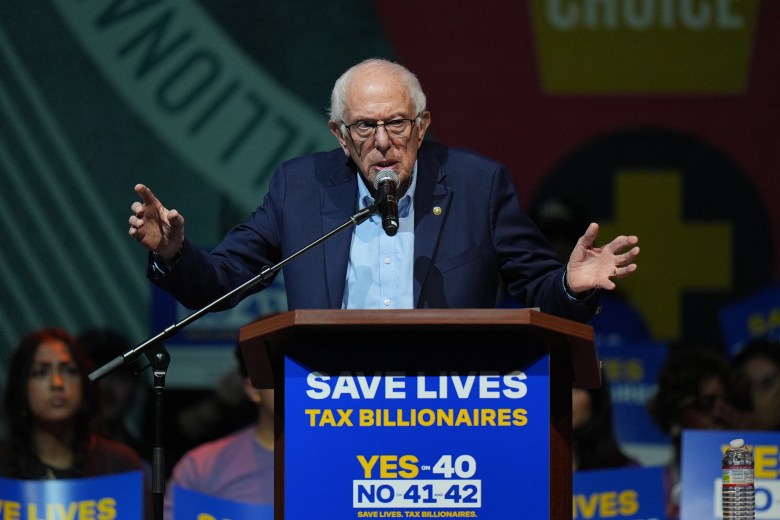
If there’s one ballot initiative you’ve heard of this election cycle, it’s probably Proposition 40, colloquially known as the billionaire tax. The measure would impose a one-time five percent tax on the assets of California’s roughly 200 billionaires, which would not include retirement or pension accounts.
It was put on the ballot by the Service Employees International Union-United Healthcare Workers West to backfill federal funding cuts to Medi-Cal. They estimate the wealth tax will raise roughly $100 billion in additional revenue over five years.
SEIU-UHW, Vermont Sen. Bernie Sanders and other proponents say a tax on wealth, rather than income, will force billionaires who pay little in income taxes to pay their fair share.
“The ultra wealthy tend to not be getting wage income. So a wealth tax is one way to make sure they’re paying their fair share,” UC Riverside political science Professor Jennifer Gaudette said.
But how, exactly, will the state calculate those assets? That question remains up in the air, as there’s plenty of logistical challenges about how implementing a wealth tax would work.
Most legal scholars believe taxing assets, rather than income, would be illegal at the federal level, which poses questions about the constitutionality of a state version. California would be the first in the country to try it out.
It doesn’t help that there’s not many other examples to point to nationally or internationally. If voters approve Prop. 40, the state would have six months to figure out basically from scratch how to evaluate the value of stocks, investment accounts, art, cars and other property.
These concerns and others have splintered the Democratic Party and reordered liberals and progressives into idiosyncratic alliances. A popular critique is that Prop. 40 would hurt the state’s long-term revenue by spurring a mass-exodus of California’s richest residents and deprive the state of their income tax revenue. (That only works for billionaires who left the state before Jan. 1, as it would apply to anyone living in California on that date.)
The departure of Google co-founder Sergey Brin and a handful of other high-profile tech moguls is a big reason why Gov. Gavin Newsom, who terms out this year, and gubernatorial favorite Xavier Becerra, staunchly oppose Prop. 40. Newsom has said he’d support a federal wealth tax instead for this reason.
San Diego’s own Democrats can’t even avoid the divide, although many have simply opted out of taking a public position.
State Sen. Catherine Blakespear, an Encinitas Democrat, opposes the proposal for similar reasons as the governor and said she would support a federal billionaire tax to prevent billionaires and their tax dollars from leaving the state.
San Diego’s Chris Ward, a Democratic assemblymember, said in a recent campaign statement that he supports the proposal because it “will help ensure billionaires made in California pay a fairer share so that healthcare costs can be stabilized.”
And the dizzying debate doesn’t stop there. Things get wonkier just down the ballot where two countermeasures — Prop. 41 and Prop. 42 — would void Prop. 40 if either receives more votes than it.
Prop. 41 would do so by tightening tax laws to block the state from collecting revenue from the wealth tax, while Prop. 42 is more of a direct rebuttal to the billionaire tax. That one would prohibit the state from taxing assets.
SEIU-UHW says the countermeasures are another tactic for billionaires to avoid paying taxes on their massive wealth. Opponents of the wealth measure, who put Prop. 41 and Prop. 42 on the ballot to counter it, say their proposals would prevent what they see as a slippery slope where retirement and pension accounts could one day be taxed.
Brin is the primary financier of both countermeasures, pouring in over $138 million in the campaigns for and against all three.
Last week at Voice of San Diego Politifest at the University of San Diego, local labor leader Carol Kim said she thinks Democrats’ division over the billionaire’s tax comes down to fears over how it’d hurt their ability to get re-elected rather than if they think it’s a good policy or not.
“I think we can chalk that up, frankly, to the fact that they have political aspirations and ambitions,” Kim said of prominent Democrats who oppose the measure.
Mark Cafferty, CEO of the San Diego Economic Development Corporation, said there are legitimate concerns that Prop. 40 is just bad legislation.
“The thing that you’ll hear over and over in my circle is this will put California at a competitive disadvantage. We do have the most billionaires in the nation,” Cafferty said. “They could make decisions theoretically to move businesses out of the state of California or stop growing jobs in the state of California.”
You Get a Ballot Measure, You Get a Ballot Measure
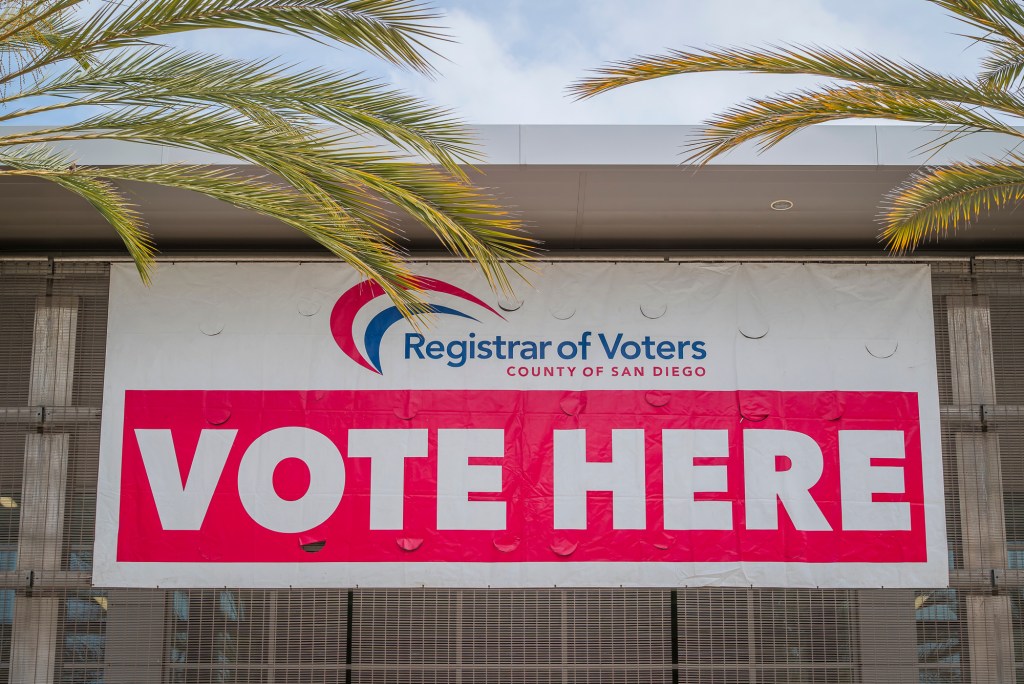
If you’re wondering why this song and dance sounds familiar, it’s because it is. And you can thank California’s ballot initiative process for that. Citizen-led ballot measures currently need about 875,000 signatures to qualify — or eight percent of votes cast in the most recent gubernatorial election — which doesn’t cost much to acquire for a wealthy person who can seed an operation to pay people to collect signatures for their initiative of choice, said Gaudette.
That’s led to a storied history of the ultra-rich putting all kinds of props on the ballot. Take ex-gubernatorial candidate and billionaire Tom Steyer who, in 2012, bankrolled a measure to close a so-called loophole that allowed companies to pay lower state taxes. And billionaire Charles Munger Jr. who is the principal backer of the propositions to create California’s independent redistricting commission 15 years ago.
This means voters have to parse through these political fights and become quasi-policy experts overnight from the sheer onslaught of measures that make the ballot each year, Gaudette said. This can be tiring, especially when it comes to convoluted tax policies.
“You ask a lot of people, and they say, ‘I don’t really know how to vote, I’ll just vote no,’” she said.
Why Are Out-of-State Billionaires Bankrolling a California Voter ID Initiative?
Venture capitalists. Packaging magnantes. Former vice presidential candidates. The donors bankrolling Proposition 39, a measure to require voters to bring a government ID to polling places, are a bit of a who’s who of Republican politics.
That includes Illinois packing supply executive Richard Uihlein, who is the biggest donor for the Yes campaign by a longshot, contributing $17 million. Other major donors include the San Diego-based right-wing group Reform California, Southern California businessman Steven Bray and Nicole Shanahan, ex-wife of Google co-founder Sergey Brin. Combined, proponents have hauled in more than $36 million. In my latest story for CalMatters, experts told me their interest may signal that the GOP views Prop. 39 as a test of support for similar proposals in more moderate states.
Uihlein is a longtime Republican donor who’s backed candidates in Illinois and Wisconsin through his Restoration of America PAC, which he and his wife Elizabeth have given $35 million to just this year.
Other high-dollar out-of-state funders to the Yes campaign include Airbnb co-founder and White House official Joe Gebbia, who this week threw down $8 million. And there are more tech entrepreneurs (or adjacent) where he came from.
Shanahan, who was also former Robert F. Kennedy Jr. ‘s running mate has pitched in $350,000, and tech executives Cameron and TylerWinklevoss have contributed $250,000 each.
If the measure passes, voters would be required to write the last four digits of a government-issued ID, like a Social Security number, on their mail ballot. Proponents, including the California Republican Party, argue that it will prevent alleged voter fraud and note that more than two dozen states already require or recommend an ID to vote.
Voting rights groups are lined up against the initiative. Common Cause, the League of Women Voters and others argue that voting fraud is rare and an ID requirement would unfairly block citizens from voting who may have recently moved, changed their last name or simply don’t have one, and that it would disproportionately affect groups who historically voted for Democrats.
Opponents have also raised a ton. As Democratic party leaders campaign against Prop. 39 as an “existential threat,” they’ve opened up their coffers. The state Democratic Party has given $5.5 million, followed by the Sonoma-area Tribal Council of the Federated Indians of Graton Rancheria with $2 million. Patty Quillin, a film producer and spouse of Netflix CEO Reed Hastings, has given $1.5 million as has longtime Democratic donor and philanthropist Quinn Delaney.
Even if the odds of its success are long in Democratic-heavy California, Republicans will be looking to see how well or poorly the measure does to get a sense of how a similar proposition could fare in toss-up states such as Wisconsin or Michigan, Sonoma State University political science Professor David McCuan said.
“There’s a spillover effect if you do better than expected, even if you lose,” McCuan said.
Read more in my latest for CalMatters.
What I’m Reading Now
- Encinitas voters continue to buck statewide political trends and those in other liberal-leaning coastal cities, inewsource explains.
- Managers at one California agency were found improperly working out-of-state for months, ABRIDGED reports.
- The USS Lincoln returns to the San Diego Bay after a record-breaking (and controversial) deployment at sea, KPBS writes.
Thanks for reading this week’s report! Please reach me at nadia@voiceofsandiego.org for any questions or comments.