
If a countywide sales-tax hike passes in November, it won’t have an expiration date.
That’s just one key detail of Measure B getting less attention than its goals of combatting Trump administration health and food benefit cuts, addressing the Tijuana sewage crisis, plus funding public safety and child care.
We dug into those details and other fine print on the measure.
The Dollars and Cents
The citizens’ initiative would increase sales taxes on most purchases from a current rate of 7.75% throughout much of the county to 8.25% – a half cent.
The county auditor’s office estimates this increase will pull in $400 million to $450 million annually.
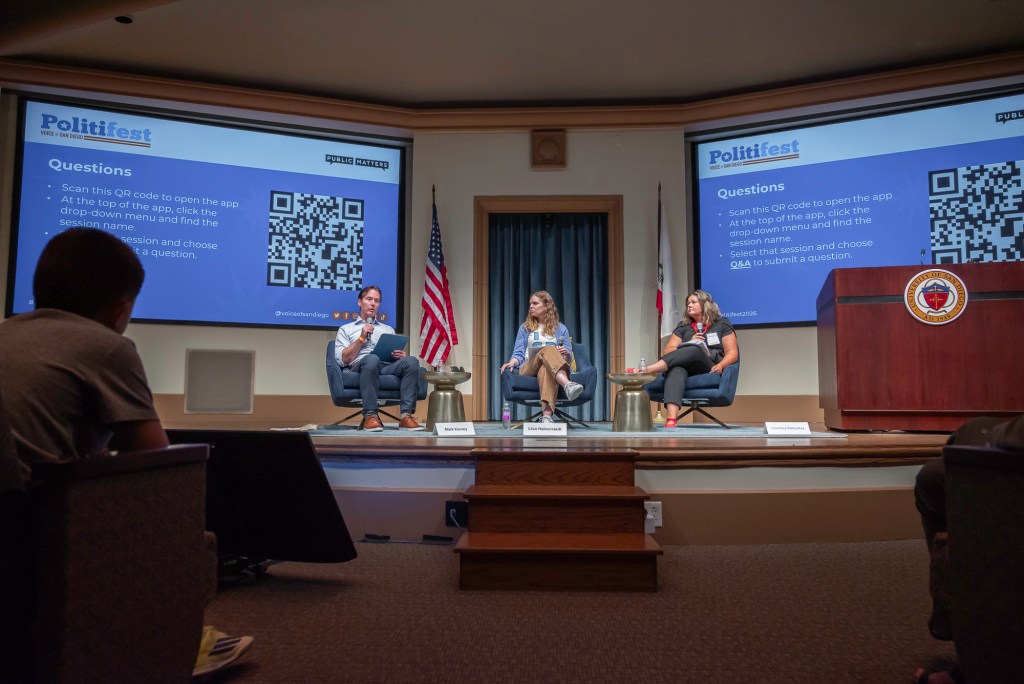
Measure B supporter Courtney Baltiyskyy said during a Politifest debate that the campaign estimates the measure will cost a family of four less than $200 a year.
Mark Kersey of the San Diego County Taxpayers Association, who argued against Measure B, didn’t dispute her estimate.
What the Measure Would Fund

Health Care and Food Benefits: Up to 60 percent of the estimated annual haul would be directed to “protecting and providing” health care, nutrition, food security and programs for families and children seeing cuts under Trump administration-backed reforms. The measure says these funds – totaling an estimated $240 million to $270 million – could “expand the county’s safety-net healthcare programs using existing healthcare providers” rather than supplant existing funding.
Seventeen percent of funds could back county programs offering health services or coverage for uninsured or underinsured low-income county residents and up to 7 percent could support food assistance, which could also mean retaining county workers who determine who’s eligible for certain benefits.
Measure B also calls for 5 percent of funds to go to in-home health services for seniors and others who are medically vulnerable and 9 percent to other affordable health services, which the measure says could cover staffing or new funding for services historically funded by Medi-Cal.
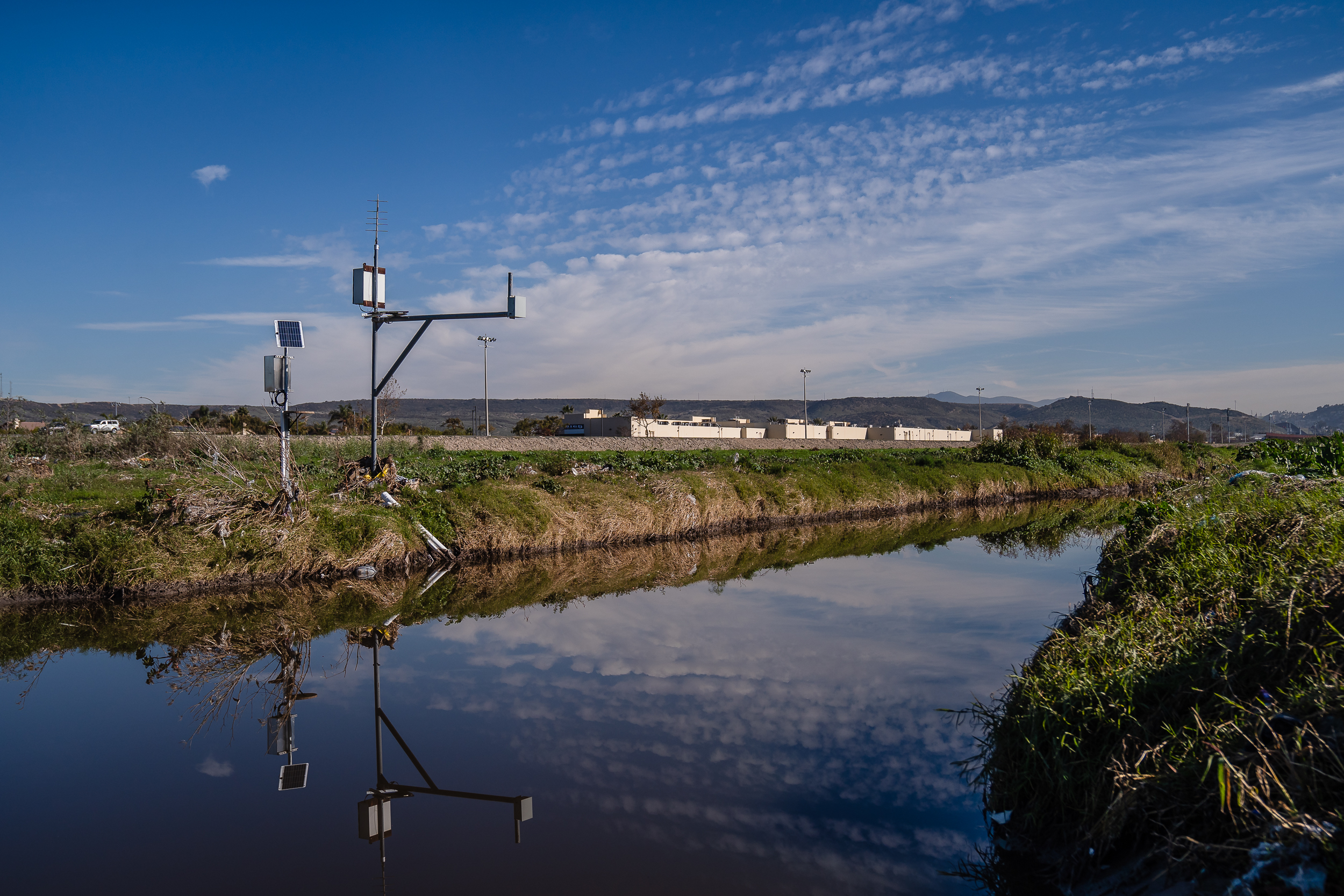
Tijuana Sewage Solutions: No more than 22.5 percent – or roughly $90 million to $100 million – could annually support efforts to address the Tijuana River sewage crisis. The measure says most of the funding should back infrastructure and engineering projects to halt sewage flows. County supervisors recently took a vote to lay the groundwork for a more formal plan to build a sewage treatment system.
Measure B also notes that if the state Water Control Resource Control Board gives the area’s water quality its seal of approval or the Tijuana River is “diverted directly into a wastewater treatment facility” then county supervisors could vote to divert the money. Supervisors could then choose to direct funds to “other environmental mitigation” or other programs such as infrastructure to protect clean water.
Child Care: Up to 22 percent of the funds – or at as much as $99 million annually – could be deployed for child care, development and safety causes. Eight percent of the money would fund stipends for licensed care providers, prioritizing those who serve infants and toddlers. Another 8 percent would back vouchers for families to obtain care. Six percent would fund early childhood mental health services.
Public Safety: Up to $79 million annually – or 17.5 percent of funding – would fund public safety causes. At least 8 percent of the funds could help the county fire prevention district retain and hire more firefighters and paramedics, increase wildfire prevention, upgrade equipment and reduce response times with training and helicopters. Another up to 8 percent could go to keeping sheriff’s deputies on the job and improving infrastructure including regional 911 systems and facilities.
Administrative Costs: At least $6 million – or 1.5 percent of the annual haul – could support county staff salaries, benefits and contracts to support the deployment of sales-tax funds.
How the Funds Get Doled Out
Measure B says top county bureaucrats will direct funds in the categories the measure lays out “based on the county’s anticipated needs and projects” for that year or over multiple years.
The Coalition Behind It
The Service Employees International Union Local 221, child care advocacy group Children First San Diego and Cal Fire Local 2881 were the leading groups that pushed to get Measure B on the ballot. Additional supporters include the San Diego Foundation, the Hospital Association of San Diego & Imperial Counties and Surfrider Foundation.
No Sunset Clause
If voters approve Measure B, the county will keep collecting additional sales taxes in perpetuity.
The Measure B campaign describes this as a feature rather than a bug.
“Because Measure B targets long-term crises — such as ramping up wildfire prevention, protecting 911 response times, safeguarding community hospitals, and solving the Tijuana River sewage emergency — including a sunset clause would be counterproductive,” campaign manager Alex Wilcox wrote in an email. “Cutting off dedicated revenue streams for programs that require sustained, multi-year investments would only create future fiscal crises, causing 911 response times to spike and critical healthcare coverage to lapse. We would be back right where we started.”
Kersey has some beefs.
Kersey argued that sunset clauses increase accountability because they force supporters to reckon with the outcomes of tax hikes and the need to ask voters for permission to re-up them.
He also questioned whether San Diegans might prefer more spending on other causes such as homelessness or want to tweak the share of the measure going to different line items over the long haul.
For example, Kersey questioned, what if Trump administration cuts are ultimately reversed?
“The priorities that they’ve locked in right now, those spending priorities will be the priorities in perpetuity,” Kersey said at Politifest.
In a statement after Politifest, Wilcox pushed back on the notion that Trump administration cuts could be quickly rolled back and argued that Measure B is “the only real, immediate answer” to protecting San Diegans from them.
Following the Money
Per the measure, a 12-member citizen oversight committee will conduct an annual spending and compliance audit and produce an annual report on its results that will be presented to the Board of Supervisors. The committee will include representatives of labor, public safety, public finance, health, science, the child care industry and people whose children are enrolled in child care and who are impacted by Tijuana River sewage. The county auditor will serve as an ex-officio member.
Wilcox said this process will give San Diegans information to press for potential changes in spending.
“The public will have the power and authority to demand changes if they decide the programs aren’t performing,” Wilcox said.
The Taxpayers Association has a different take.
Kersey argued Measure B’s approach focuses on spending compliance rather than tracking the results of that spending. He also said those who could receive funding shouldn’t be involved in the review process.
“An oversight committee should not be made of people that are actually receiving the funding,” Kersey said.
More On Child Care Support for Families
Thousands of families are now on a state waiting list for child care vouchers distributed by the San Diego County YMCA.
Roughly $32 million to $36 million annually could help the county fund child care vouchers for those families under the First 5 San Diego program.
Baltiyskyy of Children First Collective San Diego, a group that’s part of the coalition behind Measure B, said the vouchers funded by the sales-tax hike would first go to roughly 5,000 families on the waiting list.
After that, Baltiyskyy said the county and First 5 San Diego would likely rely on state eligibility standards allowing families making 85 percent of the state median income to qualify. For a family of four, that would mean making up to $115,673 annually.
She said the rollout will be based on the San Diego County Child Care Blueprint backed by the county Board of Supervisors.
Baltiyskyy acknowledged low-income families are likely to initially be prioritized, but said the goal is to make vouchers available to a wider swath of families over the long haul. Measure B itself mentions prioritizing infant and toddler care.
“While expanding care to every family remains our ultimate goal, our current priority is ensuring support is directed first to those who need it most,” Baltiyskyy wrote in an email. “We are committed to broadening access step-by-step so we can eventually serve households across all income levels.”
At Politifest, she said child care funding supporting licensed care providers will also help make care more available and accessible for families of all incomes.
The Potential Union Talks
Employees in two county labor unions may seek pay increases if the sales tax passes, as Voice of San Diego revealed earlier this year.
SEIU Local 221, the county’s largest labor union and champion of Measure B, and Teamsters Local 986, which represents construction and maintenance workers, included clauses in their latest labor deals triggering reopened pay negotiations if voters approve a measure that “generates revenue for the county’s general fund in 2026.”
The Taxpayers Association flagged this as one of its concerns about the measure.
“What we’re being told is that the money is going to go towards people who have had CalFresh benefits and SNAP benefits and healthcare and other things cut by the federal government,” Kersey said. “But if what’s actually happening is that some of that money is going to get siphoned off to pay for worker salaries and pensions, you can make the case that that’s a good use of the money, but I think people should know that one way or another.”
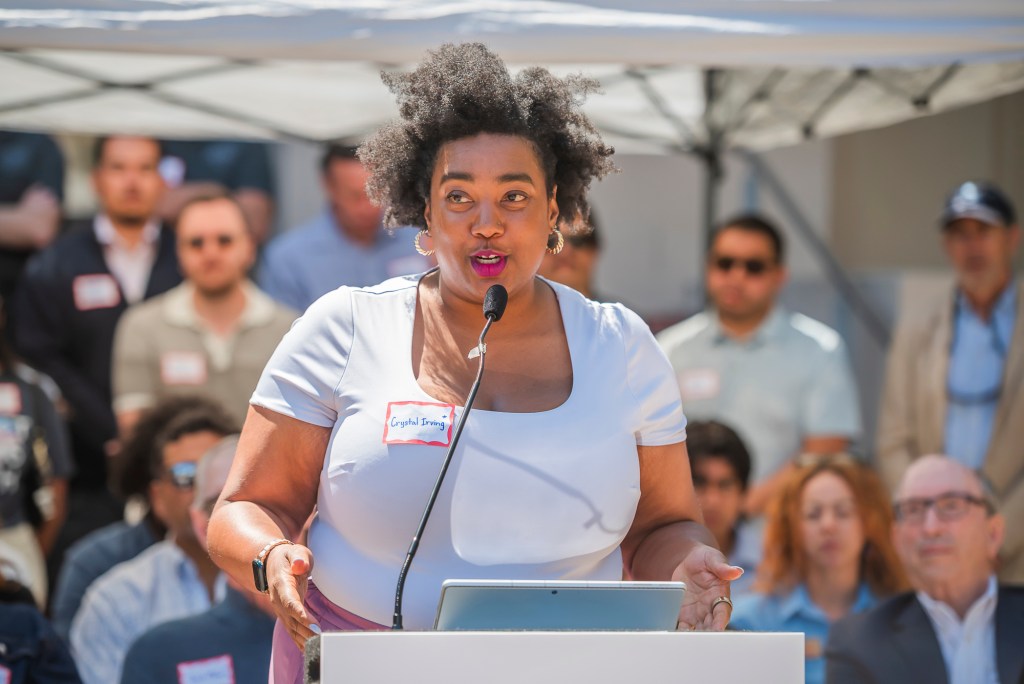
SEIU President Crystal Irving defended the language in her union’s deal in a Tuesday statement.
“Our region is facing extreme staffing shortages in nursing, mental health professionals, and first responders who provide vital services in our communities,” Irving wrote. “SEIU has negotiated a clause in its contract that will give frontline workers a voice in training and wages so that the county can recruit and retain the staff needed to address these shortages and invest in the health and safety of all people in San Diego.”
A county spokesperson previously said it would be “premature” to comment on the possibility of wage hikes.
Measure B explicitly bars some pay hikes. The measure states that Measure B can’t back bonuses or salary increases for county managers or executives, or fund pay or benefits for elected officials.