
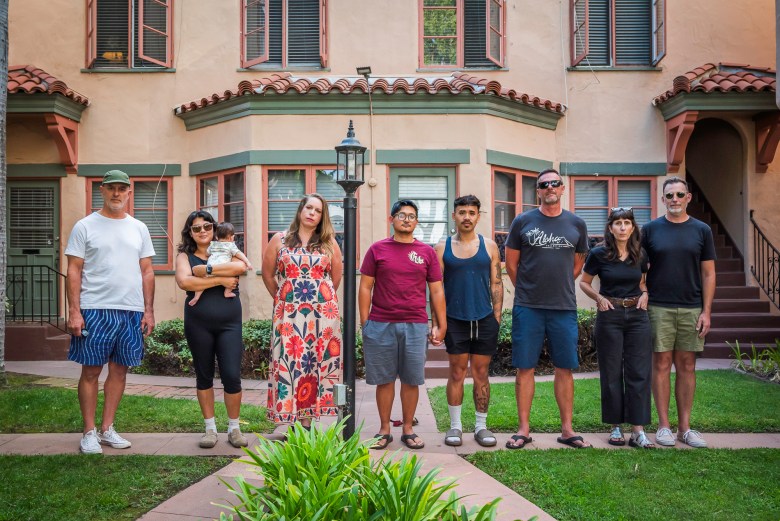
Michael Parker lived in his two-bedroom Bankers Hill apartment in San Diego for five years and for five years, his utility bill had been the same: $60 a month paid to his landlord.
The tenants of La Suzanna got letters in the mail informing them of a utility billing change. Then, last October, an email arrived from a third-party billing company called Livable, welcoming him to its billing service. Livable, it said, would ensure that “each household pays for its fair share of utility costs.”
The first bill arrived in December. Parker now owed $172.33 for trash. The following month, his share of water and sewer (billed every two months), plus trash pushed his bill to $289.27.
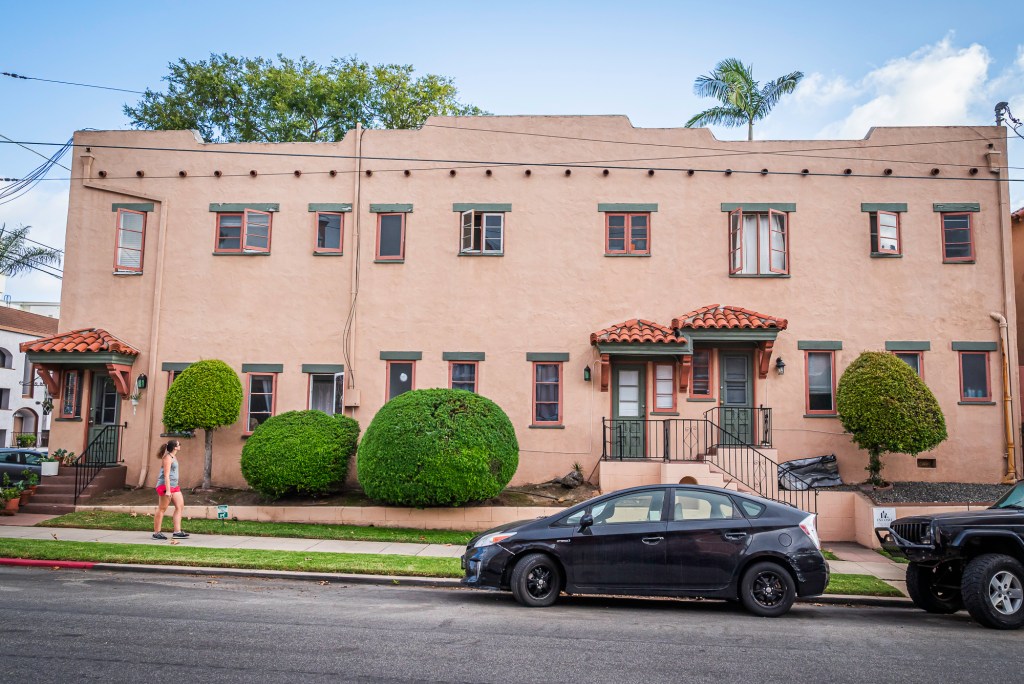
Parker’s landlord, Income Property Advisors, Inc., enrolled him and the tenants of 15 other units at the Bankers Hill apartment building in an increasingly common billing system for renters called ratio utility billing system, or RUBS.
In many buildings, utilities are measured or billed for the property as a whole, rather than by unit. RUBS gives landlords a way to divide those costs among tenants. Under RUBS, a tenant’s bill is based on factors, like the number of occupants, specified by the billing formula, rather than a meter measuring that tenant’s actual use. Different landlords, or billing companies they hire to handle the billing, use different RUBS formulas.
In La Suzanna’s case, the landlords decided they wanted tenants to cover a larger share of utilities than the $60 flat fee could. It was an outdated estimate of utility costs, the landlords told Voice of San Diego.
Parker, and most of the other tenants, were pissed. They didn’t like that their bills had skyrocketed and they didn’t trust the RUBS formula.
“It was a shock because we just got the letter in the mail and it didn’t say how much it was going to increase,” Parker said. “It just said the way they would bill us would be changing.”
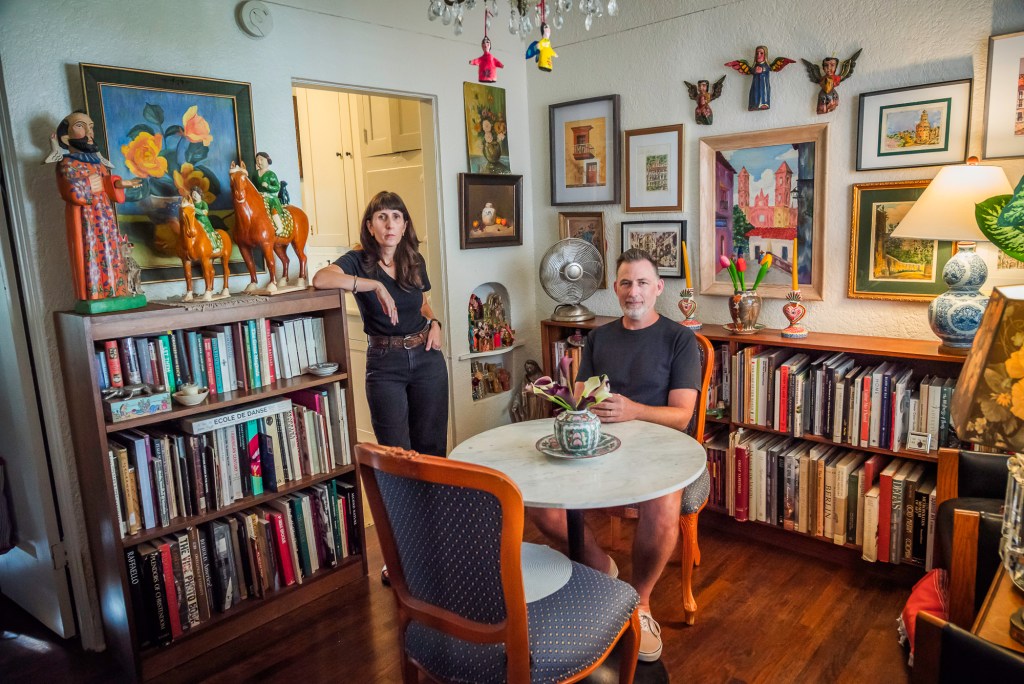
La Suzanna’s residents were already friendly with each other, which they attribute to passing one another frequently in the old Spanish-style courtyard of their 1930s apartment building. They started googling RUBS and found a 2023 article by Voice about other tenants struggling with sudden increases and unpredictable utility bills.
They also discovered a new city law that required landlords produce copies of the building’s utility bills. San Diego’s Residential Utility Fee Ordinance says landlords cannot charge tenants more for utilities, like water, sewer and trash, than what they’re being billed by the city. Requiring landlords to hand over their bills is supposed to help tenants verify that.
Backed up by the new law, the La Suzanna tenants demanded to see their property’s bills from the building manager, Tom Gelinas. They informed him that no one would be paying their utility bills until he complied with the city law and turned over the bills.
“No RUBS tenants copied on this email are going to pay their water, sewer, or trash bills until we see a clear breakdown every month of how these costs are being determined,” the tenants wrote. “We are sympathetic to the rising costs of doing business but the majority of tenants already receive yearly rent increases that can be used to cover those rising costs.”
A day later, Gelinas sent them the building’s trash, water and sewer bills. The trash bill was nearly $4,000 per month, the most significant portion of the residents’ bills.
Initially, the property manager told them the private trash hauler came four times a week. The tenants argued that couldn’t be true. Noise from the trash truck wakes them up, they said, so they knew trash and recycling were almost always collected once per week. They started monitoring trash pickups with a camera to prove it and told the landlord as much.
Gelinas later informed the residents he’d successfully negotiated a decrease in the building’s trash bill by $500 after they’d come to him. (Gelinas later said property management was already negotiating with the trash company to lower the bill.) The building’s trash bill, which Gelinas later provided to tenants, dropped to $3,122.
The tenants weren’t appeased. “It puts the burden on tenants to keep track of things,” Parker said.
And the utility bill strike continued.
The Company That Bills the Tenants
Dan Sharabi is the co-founder and CEO of Livable the utility billing company used by the landlords of La Suzanna. Landlords can divvy out costs on their own using a RUBS formula, or they can hire one of the many third-party billing companies in this niche marketplace.
Sharabi says landlords typically come to him out of necessity.
“Typically, they’re in pain, right? And the pain is, ‘My water rates are going up, my tenants don’t care,’” he said.
According to Sharabi, RUBS is intended to encourage tenants to conserve by making them financially accountable for their consumption.
“You tie someone’s usage to their wallet and they pay attention,” he said.
Sharabi pointed to the tenants’ involvement in efforts to reduce La Suzanna’s trash bill as a win for all parties involved.
“A tenant base, you’re telling me, was mobilized to save money for themselves and the housing provider? I mean, that to me just reinforces that [RUBS] works,” Sharabi said.
Sharabi started Livable in 2020 in San Francisco during the Covid-19 pandemic. The company’s first blog posts pitch RUBS as a way to help property owners reduce their environmental footprint – the idea being that tenants will use less, because they are no longer being charged a flat fee — while generating revenue for their property.
A Sept. 1, 2020 article warned property owners against the temptation of including utilities in the price of rent as a way to attract renters.
“It might be tempting to include utilities in the monthly rent in an effort to attract renters. We would argue that such a short-sighted plan could cost owners A LOT in the long run,” the blog post reads.
Utilities are not fixed costs and tend to rise higher and higher over time, the company argued.
The company’s not shy about marketing RUBS to landlords as a way to make — or “recover,” as the company says — extra revenue from tenants.
“Utility costs don’t have to erode your property’s [return on investment]. Livable’s RUBS transforms utility management into a profit driver, recovering expenses, streamlining operations, and enhancing property value,” a July 17, 2025 blog reads.
When asked whether property owners were profiting off of implementing RUBS, Sharabi directed those questions to “housing providers.”
“I don’t own any property. I don’t want to speak for them,” he said. “But it’s conservation … There’s a cost for a utility that’s being used by the tenant, right? This is not just found revenue. There’s consumption attached to it.”
How Tenants Unionized

La Suzanna tenants say they don’t see smaller bills if they use less water or make less trash. They’re also suspicious of third-party billing companies that implement RUBS like Livable.
“If somebody installed a jacuzzi, a slip and slide, a pool, we’re all splitting that,” said Parker. “You’re paying for other people that might be abusing it.”
During the tenant’s negotiations with the building’s managers, they learned the landlords covered 30 percent of utility costs while the tenants absorbed the remaining 70 percent. Gelinas, the property manager, told La Suzanna’s residents that their utility bills would fluctuate month to month but that the total would never exceed a cap of $200.
The tenants weren’t satisfied. They got in touch with Ali Mehraban from the San Diego Tenants Council through a mutual friend. He helped them organize.
Mehraban encouraged the renters to form a tenant association, draft their demands and argue the landlords should keep the fixed rate billing they’ve had for years.
“There is no threat of retaliation for organizing a tenant association and making demands on your landlord,” Mehraban wrote the group in February. “In fact, it is illegal.”
A few days later, the La Suzanna Tenants Council was born.
On Feb. 18, the tenant council sent a letter to Gelinas, asking him to get rid of RUBS.
“At La Suzanna, this shift has resulted in charges rising from… $60 per month to nearly $200 – an increase that is both excessive and unsustainable,” the tenants wrote.
Gelinas initially agreed to lower it to $150. The tenants council countered with a $100 cap and a 50-50 split of the utilities. It was now March, and Gelinas agreed to the lower cap but to maintain the 70-30 billing split. The tenant council accepted those terms.
Landlords Respond

When asked whether Income Property Advisors, Inc. would continue to honor that cap during the next round of leases, neither Gelinas nor Robert “Bob” MacGuire, the property company’s founder, guaranteed it.
“We negotiated for a year to keep the cap at $100 to help alleviate the new (utility) increase,” MacGuire said.
Whether it could rise again, “we don’t know,” they both said. They’ll have to look at next year’s expenses.
At least one new tenant, whose lease began after the negotiations ended, didn’t get the same deal as the other tenants. A lease shared with Voice, showed the cap at $200.
Gilberto Vera, an attorney at Legal Aid of San Diego, has been seeing a growing trend of landlords switching to RUBS, since California passed the Tenant Protection Act of 2019. The law caps rent increases at a maximum of 10 percent each year.
“Landlords have begun to pull out all these types of fees and expenses previously included in rent so they can increase [gross] rent to the max,” Vera said. “It is currently legal to do that.”
MacGuire and Gelinas said the $60 the tenants were paying per month, inherited from past leases under previous management, was a “very outdated estimate” of the building’s true utility costs.
“This is not a profit center for real estate. This is just trying to capture what’s being used by the tenants,” MacGuire said.
The biggest problem for them: Rising water, sewer and trash rates in the city of San Diego. The San Diego City Council recently hiked water and sewer rates by more than 30 percent over the next two years.
“The city is causing all the landlords to do this,” MacGuire said.
Even so, RUBS has caused unpredictability in the lives of La Suzanna tenants, said AJ Muña, a middle school teacher, and his partner Izaiah Esguerra-Coloma, a home baker. “It’s pushing our budget,” Esguerra-Coloma said.
Another tenant suggested that if water costs were too high, the building could reduce its landscaping and install more efficient fixtures.
“If your water’s expensive, well that’s fine, then we want a desertscape. This is San Diego. Get rid of all the grass that’s in here,” said Jason Adams, another La Suzanna tenant. “We want energy- and water-efficient sinks.”
The La Suzanna tenants are exhausted from their months-long fight to lower their utility bills. While they take the $100 utility bill cap as a win, they’re fretting about having to renegotiate for next year’s leases.
“What did we win?” said Parker. “We kind of just, not gave up, but we were just so out of energy. We just said let’s just move on with our lives, accept the cap. But now we’re gonna’ have to do it all over again.”