
Twenty-eight years ago, Saturday Night Live cut to “satellite imagery” of the tropical storm threatening the Pacific Coastline: It was Chris Farley dressed as a pro wrestler named El Niño.
The 1997 El Niño threatened to bring Southern California one of its worst winters in history, according to a Los Angeles Times article published days before the SNL sketch.
Sound familiar?
El Niño, and its sister phase called La Niña, is basically a big switch in the conditions of the ocean and the atmosphere around the tropical Pacific Ocean with global weather implications. And everybody is really worried about it right now, again.
Weatherman/Mayor Todd Gloria filmed multiple social media videos in Mission Beach ahead of Hurricane Rachel highlighting potential flooding and the city’s preparations.
This El Niño is predicted to be the strongest on record. The city of San Diego, the county and the state of California have all declared emergencies ahead of the potentially severe weather El Niño can bring. At its core, El Niño is a redistribution of ocean heat energy that swings either eastward or westward.
Here’s how it works: During El Niño, the winds that usually push warm, tropical water west toward Asia weaken. Instead that warm water begins to build off the shores of Colombia, Ecuador and Peru. The ocean warms and expands, and energy from the deeper ocean waves pushes that warm water and air toward Southern California. (NBC 7 has a really good run down of this here.)
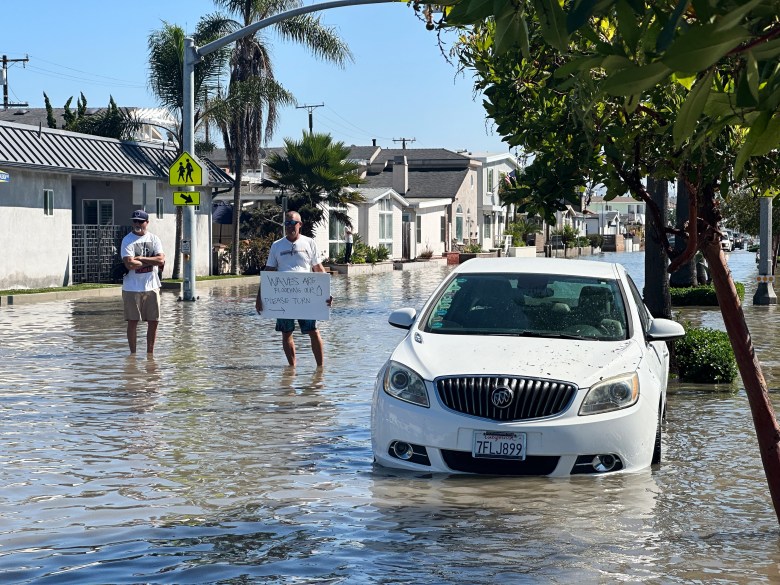
That (plus human-caused climate change and storm surge) is why we are seeing very high tides crashing into places we’ve not seen before, like shoreline homes in Long Beach or Newport Beach.
But there’s one very large difference between the super El Niño of 1997 and the super El Niño of 2026. And it’s not that Farley is no longer with us — RIP.
Enter another important climate pattern called the Pacific Decadal Oscillation, or PDO. The PDO is also a shift in Pacific Ocean temperatures but more between the northern and southern hemispheres. It also occurs over much longer timescales. El Niño can switch to La Niña in a period of a few years. The PDO lasts decades as its name suggests. Since 2020, the PDO has been in a “cooling” phase. And that should be good news.
What you need to know is that during that 1997 El Niño, the PDO was stuck in a warm phase, causing warmer-than-average temperatures in the North American west coast. That supercharged a big current of air called the subtropical jet stream, during the already supercharged heat energy El Niño can bring, which led to record rainfall and severe flooding in California.
Point is – thanks to our friend PDO cooling off, it could help protect California from some of the intensity we might otherwise expect from a super El Nino.
“That’s really the million-dollar question,” said Corey Gabriel, executive director of the Climate Science and Policy program at Scripps Institution of Oceanography in San Diego. “The El Niño itself is so strong that it might just steamroll the negative [cool] PDO. But it isn’t just how warm the Pacific gets. It’s where that warming occurs and how the atmosphere responds to it.”
Some scientists say the PDO’s effect won’t really matter because the El Niño signal is so strong. We’ll see how it all develops over the next several months.
This weekend was a little glimpse into what El Niño driven hurricane weather can bring to the shoreline. I bopped down to Ocean Beach on Sunday morning to find that most of the beach was, well, in the ocean. My social media algorithm fed me videos from up and down the San Diego County coastline of water-consumed parking lots, like at Tamarack State Beach in Carlsbad and waves fully overtopping The Strand in Oceanside.
There were some things to enjoy, like sightings of more tropically adjusted marine life finding their way to the California coastline, probably following the influx of warmer waters. A commercial fisheries plane spotted a whale shark last month between Malibu and Santa Barbara island. In August, fishermen caught video of a hammerhead shark off the Malibu pier.
In San Diego, marine expedition companies recently spotted a giant oceanic manta ray off the coast of La Jolla. And a rare, historic super-pod of pilot whales stunned a whale watching company earlier this month.
Also my editor (and spearfisherman) Will Huntsberry informed me that it’s really exciting to see people catching Wahoo, a fish that’s typically living in the Bahamas right now, off our coast.
In Other News
- A California lawmaker is pressing for answers after prisoners said they were restricted access to large fans, ice water and other ways to stay cool, during an intense heat wave at Donovan Correctional Facility last month. (KPBS)
- In other heat news, county data show a record number of 911 calls related to heat which spiked during the two major heat waves this year. (KPBS)
- Two Imperial County supervisors called for a special election to hand the decision over whether data centers can be developed there to the voters. (KPBS)
- I spoke with KPBS Roundtable about the new law legalizing plug-in solar in California. Take a listen.
- SDG&E is holding public meetings for its proposed new transmission line from Imperial County to the Orange County-San Diego line. (Union-Tribune)
- The San Diego City Council punted on a decision that would lower water rates for apartment buildings but increase them for single-family homes. (KPBS)