
An email about building a massive data center in the heart of San Diego hit San Diego Community Power inboxes on Nov. 10, 2025.
“I am flying to Doha at the end of the month to meet with data center investors and if I could get the numbers prior, it would be really helpful,” wrote Ted Eldredge, president and CEO of Manchester Financial Group, to the energy agency’s senior director of data analytics and customer operations, Lucas Utouh.
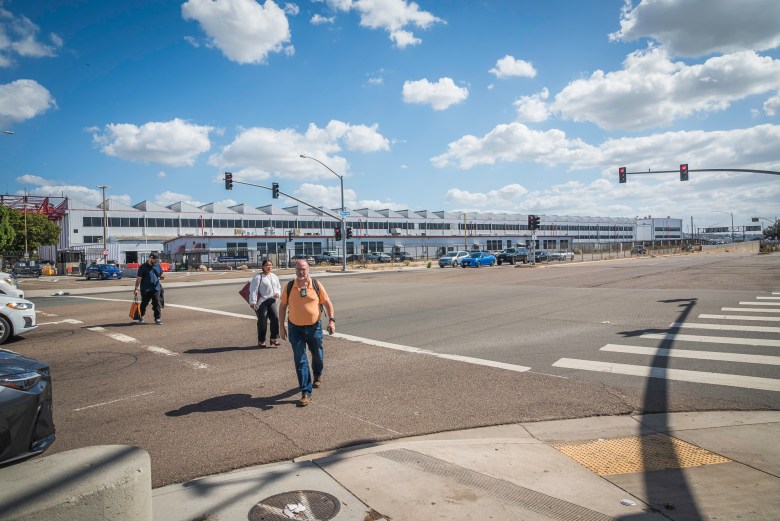
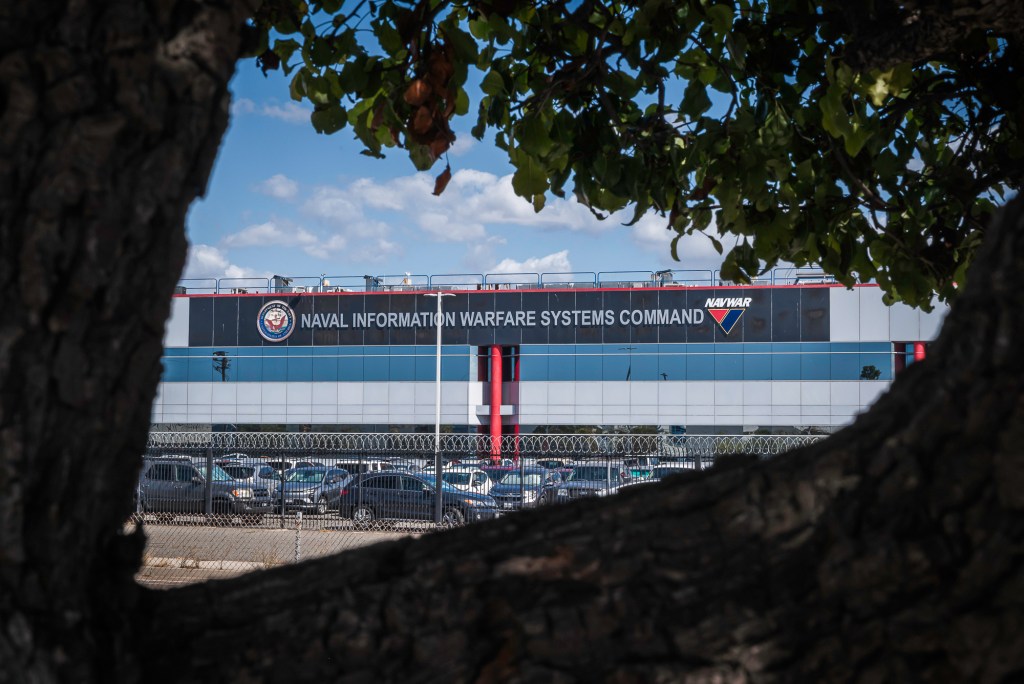
Eldredge was reaching out to Community Power because he wanted to know how much it would cost to power a 400-megawatt data center at the site of the Naval Information Warfare Systems Command near Old Town.
Manchester Financial is in fact exploring the possibility of building a massive data center on a 70-acre plot of land owned by the federal government, emails obtained by Voice of San Diego show.
A 400-megawatt data center is very big; if built it could possibly be the largest data center in all of California. By comparison, a highly controversial data center proposed in the Imperial Valley would be 330 megawatts.
Until now, the proposed project Manchester’s company had made public was for thousands of apartments – potentially for military families – hotels, restaurants and retail, according to a project summary submitted to the city of San Diego in 2024.
The data center is just one idea among many, Eldredge said Tuesday. The team has also considered a stadium, a hospital and a university campus. But Matt Awbrey, who was recently hired to help represent the team, confirmed that a data center is not off the table. He provided a statement from the project team.
“The potential plans for this site continue to be refined, and no final project has been approved,” the statement read. “Our first priority is delivering modern facilities for NAVWAR and we remain committed to working with the navy and other key stakeholders throughout this process.”
Manchester is currently in negotiations with the Navy to develop the land. The deal is supposed to work something like this: Manchester builds a new system command center for the military and, in exchange, gets to build something else on the rest of that land under a 99-year lease.
Navy officials said the final project hasn’t been determined, but it could include a mixed-use development and a data center.
Data centers house and run large computer systems that process and transmit data. They’ve been around for decades but only recently exploded in scale with the proliferation of artificial intelligence. “Hyperscale” data centers, like the one Manchester is exploring, need hundreds of megawatts of power to do their job. The one being considered at NAVWAR could use the equivalent of 320,000 homes.
The data center idea was news to San Diego City Councilmember Sean Elo-Rivera, who sits on San Diego Community Power’s board.
“I’m quite bothered by what you told me,” Elo-Rivera said. “The fact that it’s happening on federal property and the city has next to none if not literally no way of regulating what happens there gives me even more concern, because this is happening in the context of a federal regime that is completely tone deaf as it relates to community concerns about data centers.”
Elo-Rivera said data centers came up during a meeting between Community Power leaders and board members on April 22. But when he asked if there were any proposed projects in the pipeline, he was told “no.”
He asked for an additional briefing on May 22 with the agency’s top leadership, who he said again failed to inform him of any data centers in the works. Now, Elo-Rivera says he’ll be going back to the agency for an explanation.
It’s the responsibility of the CEO to keep board members in the loop, Jen Lebron, a spokesperson for Community Power, wrote in a statement.
The former CEO, Karin Burns, went on leave back in June, as Voice first reported. She returned in September to serve as an “executive advisor,” a new position at the agency, through Jan. 15. Her staff gave her middling grades on a leadership survey before she went on leave.
President Donald Trump has been a vocal supporter of data center buildout, and recently inked an executive order that accelerates federal permitting of data center infrastructure. Doug Manchester, the namesake of the development firm, has ties to Trump. The president nominated Manchester as U.S. Ambassador to the Bahamas during his first term, but he was never appointed because he withdrew himself from consideration.
Elo-Rivera says that property, for which the city of San Diego will ultimately have responsibility in terms of any environmental analysis on the final project, should be reserved for housing.
“We could use that land to make sure there isn’t a veteran sleeping on the streets,” he said.
Data Center Prospectors
Eldredge said his firm has never tried to build a data center before.
“We’re hotel developers,” he said. “We’re not in the data center space. We’re just trying to figure out a lucrative way to build the Navy their building.”
Jonathan Koomey, who has been studying data centers for 25 years and co-authored multiple data center reports to Congress, said there’s a speculative “frenzy” to build data centers right now.
“There’s a bunch of people who don’t know much about data centers who are trying to do this… to make money,” Koomey said.
But a lot of these proposed projects probably will never pan out, he said.
In Texas, for instance, there are so many projects being proposed with the hope of getting permission to connect to the state’s grid that — if all of them were permitted – they’d collectively need as much power as a quarter of total United States demand right now, Koomey said.
These speculators, as Koomey called them, are trying to buy land and get into the grid interconnection queue. Sometimes they buy water rights (water is often used for cooling data centers) if they’re serious, all with the hope that a big player like Amazon or Meta will commission them to build there.
“It’s gold rush style,” Kooney said.
What a 400 MW Data Center Needs
Utouh got back to Eldredge on his price inquiry on Oct. 25. He stressed that the quote was just an estimate and could change based on the energy market. On the most expensive end of his quote, at $0.11 per kilowatt hour, it would likely cost over $1 million a day to run a 400-megawatt data center in power costs alone.
That price would potentially lock-in the rate for 10 years. That’s about three cents cheaper per kilowatt hour than an average resident pays Community Power for its basic energy plan called Power On. Lebron, the spokesperson for the agency, wrote in an email that the total price quoted in the email didn’t include other types of charges and fees.
Communication about the project went dark for awhile after the November 2025 inquiry. Then on March 4, Eldredge told Utouh his firm had arranged a call with lenders at Liberty Strategic Capital to discuss the data center. And, that they’d asked San Diego Gas & Electric, the region’s monopoly electric grid builder, to do an engineering study on what adding that kind of new demand would require of the grid.
SDGE spokesperson Anthony Wagner said the company doesn’t comment on specific customers or potential projects and treats such conversations as confidential.
It’s unclear whether a data center of this scale could even fit on the 70 acres of land the federal government owns near Old Town. A lot of different variables can affect how large a data center’s footprint has to be.
But, for example, the QTS Phoenix 2 data center in Arizona occupies 80 acres of land to host at least 210 megawatts of computing capacity or just over half the size of the one proposed in San Diego, according to the company’s website.
Data Center Community Benefits: ‘TBD’
Utouh sent the developers a questionnaire later in March to try and gather more information about the project. The developers suggested that the 400-megawatt complex would be phased in at 100-megawatt increments every six months until completion. What are essentially rooms full of servers would be split across multiple buildings, the developers wrote.
Would the data center be required to use 100 percent renewable resources, Utouh asked. Community Power’s whole mission and impetus is to power the communities it serves with 100 percent renewable energy by 2035.
“Unlikely, though the ultimate hyperscale tenant would need to opine on this,” the developers wrote.
Hyperscaler is a term for these now massive data centers being proposed and built, often by big name tech companies like Google, Microsoft and Elon Musk’s company XAI. Eldredge confirmed that Manchester Financial doesn’t yet have a customer committed to buy the processing power of their project.
The developers said there would be back up power on site. That could potentially come from sources that are not renewable like natural gas generators. Elon Musk’s XAI Colossus project in Tennessee has been highly criticized for building what amounts to jet engine back-up generators without permits, which communities of concern are now alleging have harmed their health.
When asked about community benefits, like how many local jobs the data center would create and whether they’d be union labor, or whether they would partner with local talent and schools, the developers wrote: “TBD.”
“Several of the questions, particularly around community benefits, are TBD until we determine the tenant,” wrote Franz Rassman of Liberty Strategic Capital, a potential lender on the project, in a March 11 email to Utouh.
Rassman declined to comment further for this story.