

By early next year, the city will be down hundreds of homeless shelter beds. City officials have yet to publicly reveal how they will replace most of them within the next few months.
For now, Mayor Todd Gloria is sharing one major piece of the plan the city could execute this fall: expanding two homeless campsites in Balboa Park to accommodate dozens of additional tents.
Gloria said last week the city expects to move at least some residents of its 264-bed brick-and-mortar shelter in the City Hall complex into safe sleeping sites if they don’t find other options first. The Golden Hall shelter may shut down early next month. As of last week, 191 men were staying at the Golden Hall shelter, which stopped welcoming newcomers this summer.
Gloria is adamant Golden Hall residents won’t land back on the street.
“No one will go back to the streets who are currently at Golden Hall,” Gloria said Wednesday. “That is our commitment. We will keep that commitment.”
But part of the city’s initial plan is for at least some Golden Hall residents to move outdoors, a move likely to upset some advocates and some people now staying in Golden Hall.
Gloria spokesperson Rachel Laing told Voice of San Diego that other plans are also in the works but declined to elaborate on them.
The city needs to settle on solutions for residents of other shelters slated to close in coming months too. The city and its housing agency are seeking out potential shelter sites, including from city councilmembers and private property owners.
Gloria’s team is also continuing to work on plans for a proposed mega-shelter campus near the airport that the City Council punted on in July. But even if the City Council approved the controversial pitch this month, new shelter beds at the facility wouldn’t come online until late next year.
Meanwhile, impending closures are already impacting homeless residents’ access to shelter.
Here’s what we know about shelter closures and what the city’s doing to try to find new options, including with continued work on the proposed mega-shelter.
What’s Closing and When?
City-funded shelters at Golden Hall and Father Joe’s Villages East Village campus that once collectively sheltered up to 614 homeless residents each night have already stopped welcoming newcomers. The city fire marshal’s permit for Golden Hall, which serves homeless men, is set to expire Oct. 6.
Laing said the mayor’s team sees that date as the deadline to have a solid plan for the move. She didn’t clarify if the administration may ask the fire marshal to allow it to move residents out after that date. Laing said plans will “first be communicated to residents” and that contracts will need to be approved to facilitate what happens next.
Father Joe’s has also said it expects to close its 350-bed Paul Mirabile Center shelter for single men and women by the end of the year to transition the facility into a detox and sober living facility.
Two smaller shelters in East Village and the Midway District that collectively supply 84 beds for women and people with behavioral health challenges are slated to close by January per a July report to the City Council. (The Midway shelter closure could be later based on recently announced delays in the redevelopment process.)
The old Central Library, which temporarily provided 34 beds for homeless women, already stopped serving as a shelter in July.
All told, these closures add up to a loss of 732 shelter beds by early next year.
At some point, a 326-bed Barrio Logan shelter tent for single men and women also must come down to make way for a housing project. Gloria said last week that the project start date has been repeatedly postponed and that he doesn’t expect the city will need to hurry to take down the shelter tent in the near future.
What’s the City Doing to Find New Sites?
The city and its housing agency are scrambling to come up with alternative shelter sites ahead of the closures.
The City Council is set to get a Sept. 24 briefing after directing city staff to present a short-term action plan ahead of the bed losses.
Before that City Council direction, the Housing Commission in late June issued formal requests to identify potential new shelter sites and gauge the capacity of homeless service providers to operate new programs that remain open. As of last month, the agency said it had received six responses though it declined to elaborate on them, citing procurement rules.
The city on Friday also issued its own formal request to property owners and managers who may be interested in offering up potential shelter sites. Responses are due Oct. 7.
Early last month, the city’s point person on homelessness also asked councilmembers and the city’s Office of the Independent Budget Analyst to propose potential shelter sites. The Union-Tribune wrote about their responses.
City spokesperson Matt Hoffman said sites that councilmembers and budget analysts recommended are now “under review” and that city officials will provide details on those sites on Sept. 24.
A top official in the city’s Homelessness Strategies and Solutions Department also recently asked the nonprofit Lucky Duck Foundation, which separately flagged a potential site near the proposed mega-shelter site in a letter to Council President Sean Elo-Rivera, to help connect the city directly with that property owner.
Dan Shea of the Lucky Duck Foundation said he responded Aug. 30 offering to help arrange a meeting this month but didn’t hear back on a meeting date.
Laing told Voice city decided to have the property owner participate in its formal process.
Shea is concerned the process could drag out based on past experience, but said the property owner for now expects to participate.
Where Do Things Stand with the Mayor’s Mega-Shelter Proposal? Could that Help?

Gloria said last week that his team continues to negotiate with the owner of a warehouse at Kettner Boulevard and Vine Street in Middletown they at least initially envisioned could become a 1,000-bed shelter campus for decades to come. Gloria has argued the more permanent shelter location would minimize future headaches about shelter closures.
But even if the city moves forward soon, the mega-shelter won’t quickly solve the city’s shelter woes. Based on the city’s earlier estimates, it will take months of property upgrades and construction to welcome homeless residents once the city takes control of the property. Officials estimated that if the mega-shelter lease was approved in July, the shelter might open in June 2025.
Now it’s unclear when – and whether – the shelter proposal will return to the City Council.
After a slew of questions and concerns raised before and during a July 22 City Council review of a proposed lease, Gloria’s team has been revisiting both potential deal points and its plan for the site with input from the city’s housing agency and the Regional Task Force on Homelessness. At the request of Gloria’s office, some councilmembers also submitted memos sharing feedback and proposed changes to the lease.
Gloria acknowledged there’s still lots of work to do despite his eagerness to move forward. He wouldn’t commit to sending a new lease back to the City Council this month, as originally planned.
“When we can bring a deal that I can stand behind and I believe will get a reasonable consideration by the City Council, we’ll bring it back,” Gloria said.
What if he can’t secure a deal he thinks the City Council can support or if the warehouse owner walks away?
“If the property owner walks away, we’ll make that known to the public and we will turn around and start proposing other solutions,” Gloria said.
What’s the Safe Sleeping Expansion Plan?
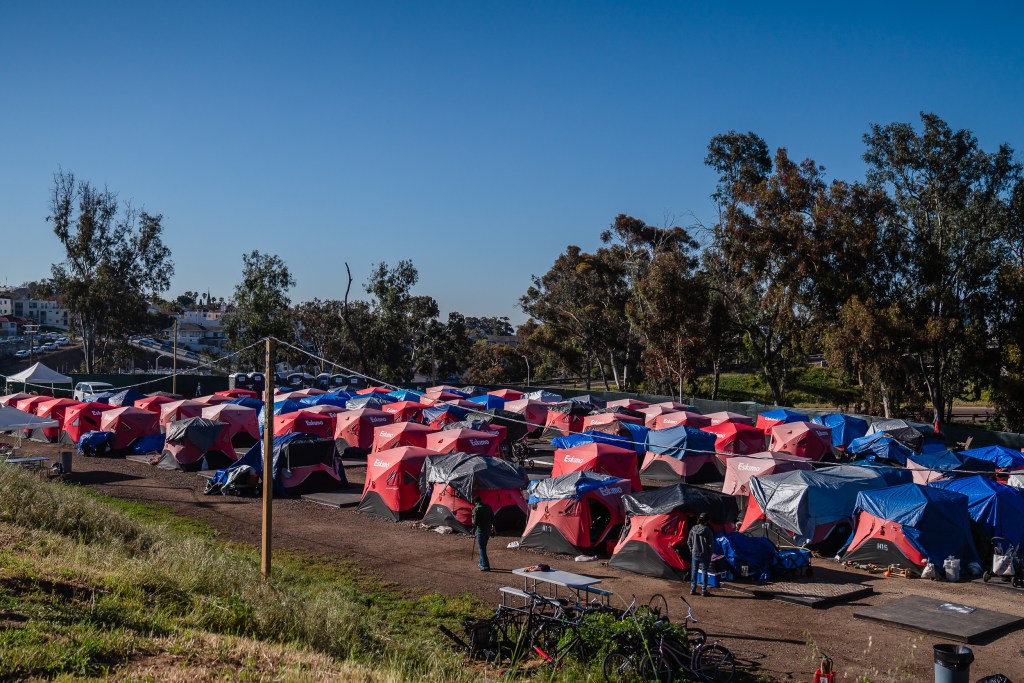
The city’s Homelessness Strategies and Solutions Department revealed in July that the city’s two safe sleeping sites at 20th and B Street and the O Lot behind the Navy hospital in Balboa Park could accommodate 192 additional tents this fall. Officials estimated this would cost about $4.2 million.
Laing said city officials now believe the cost of the expansion will be “much less” than that earlier estimate.
It’s not yet clear exactly when the sites could expand and whether the City Council will need to sign off to allow it.
The safe campsites have been controversial among homeless advocates who argue they are substandard shelter options. In their initial months, the safe sleeping also didn’t move the same volume of residents into homes as the city’s traditional city shelters, which reflects differences between the two approaches designed to give homeless San Diegans a refuge from the street.
These dynamics are likely to fuel criticism about at least one piece of the city’s plan to deal with the Golden Hall closure.
How are Shelter Closures Impacting Homeless San Diegans?
For years, the city’s had a shortage of homeless shelter beds. Though Gloria and others have touted the hundreds of beds the city has added in recent years, homeless San Diegans who seek shelter often can’t access it.
Impending closures and decisions to stop welcoming new residents to prepare for them are already reducing access.
In the weeks after the two large Father Joe’s shelters halted intakes and the old library shelter closed, Housing Commission data showed an average of 87 percent of shelter requests through the city’s housing agency didn’t result in someone getting a bed. That’s up from an average of 82 percent of referrals being unsuccessful the first six months of the year.
The situation will only worsen if the city can’t find other options.
Gloria spokesperson Rachel Laing told Voice of San Diego that other plans are also in the works but declined to elaborate on them.
LOL, kind of says it all. We want to do what we want and not inform the taxpayers.