
This story has been updated.
The Trump Administration awarded a new, no-bid contract to a company that’s being sued for allegedly failing to keep the Tijuana sewage crisis at bay.
And two men who work for agencies on either side of the contract also worked together previously at the Environmental Protection Agency during Trump’s first term.
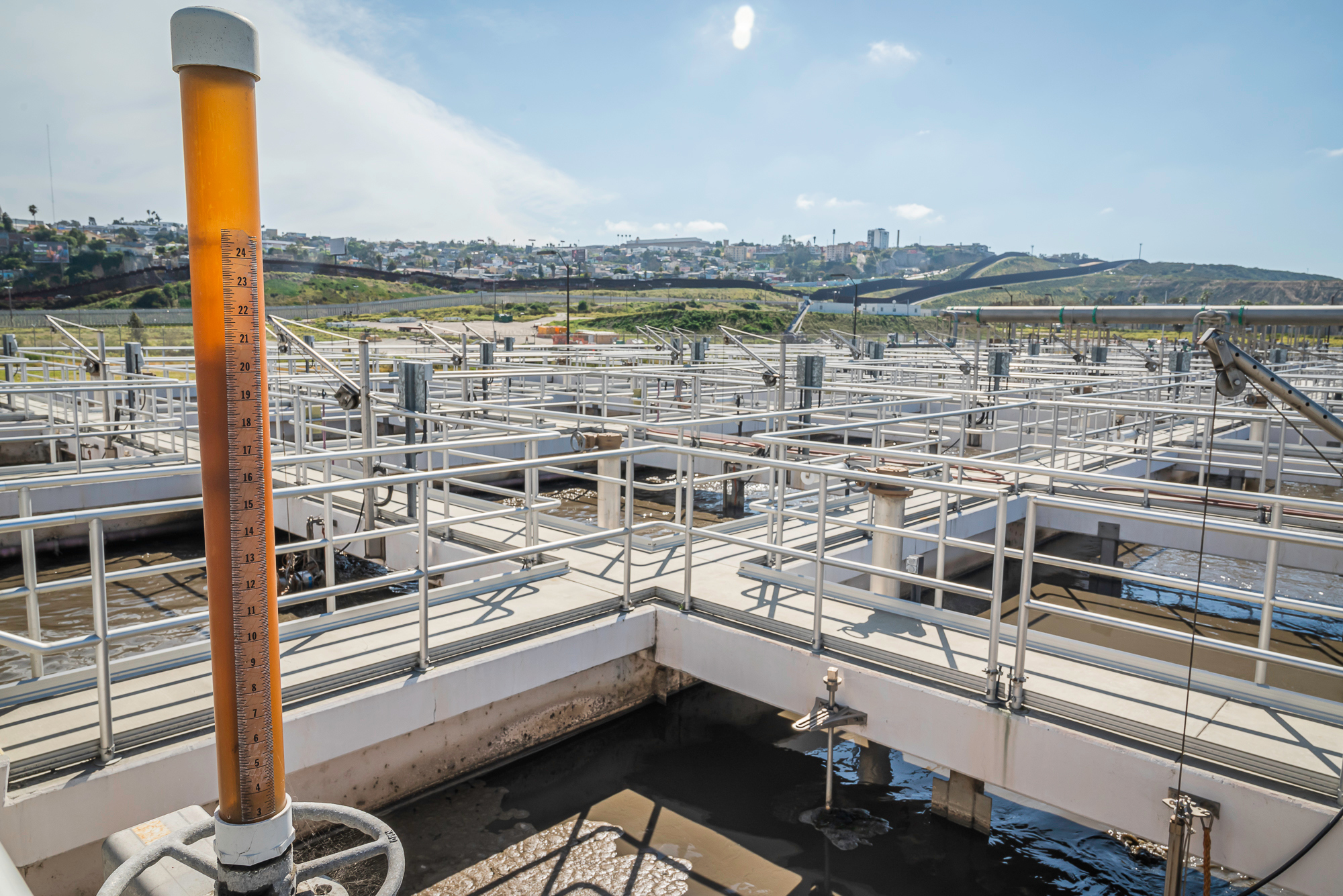
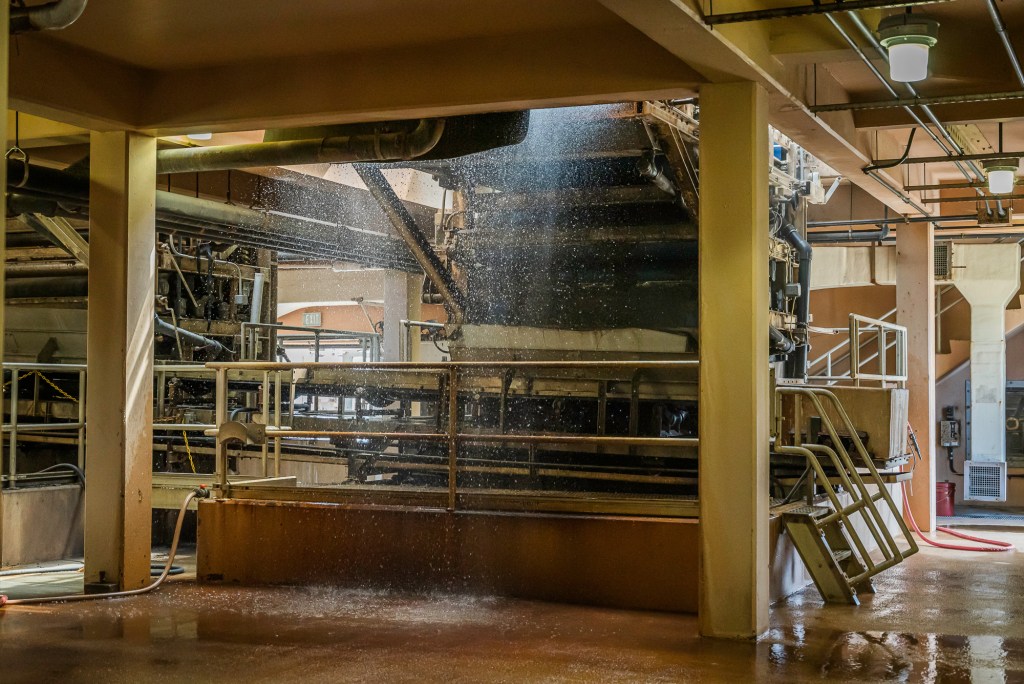
In April, the federal government re-hired Veolia, one of the world’s largest private operators of water, waste and energy services, to run the South Bay International Wastewater Treatment Plant at the U.S.-Mexico border. Veolia has been the private contractor operating and maintaining the plant for years. But recently it became the target of several lawsuits filed by residents, a Coronado school district and environmental groups that allege the plant has violated the Clean Water Act under Veolia’s stewardship.
Originally, the federal government put the contract to operate and maintain the plant out for public bid. But the bid was eventually cancelled and the government rehired Veolia.
The $27.3 million contract for just over a year’s worth of work is more than double what the company made per year under its last five-year contract signed in 2020. Representatives for Veolia say there’s a perfectly good reason for that: The increase is mostly due to the Trump Administration’s recent push to increase sewage treatment at the plant by 40 percent, according to Mayra Jimenez, a Veolia spokesperson.
Costs to operate the plant, purchase chemicals, lab services, handle sludge and remove debris went up since 2020 as well, Jimenez wrote in an email.
But the groups suing Veolia think the contract stinks.
“We believe very strongly Veolia has done a crap job,” said Knut Johnson with Singleton Schrieber who’s representing Imperial Beach residents. “It seems like a terrible business decision [to rehire Veolia] if you’ve hired someone to clean sewage and they spend a decade or more violating [the Clean Water Act.]”
Jimenez, the Veolia spokesperson, called the lawsuits a “counterproductive distraction that will not stop a single drop of Mexican sewage.”
IBWC Head Worked with Veolia VP
One of Veolia’s top leaders previously worked with the leader of the government agency awarding the contract, the International Boundary and Water Commission or IBWC, at the U.S. Environmental Protection Agency during Trump’s first term. The IBWC owns the plant but awards contracts for other companies to operate it.
David Ross, executive vice president of governmental affairs at Veolia, was an assistant administrator for the EPA’s Office of Water. Chad McIntosh, the newly-appointed commissioner of the IBWC, was assistant administrator at the EPA’s Office of International and Tribal Affairs.
“Commissioner McIntosh and Dave Ross both held senior roles at the EPA at the same time for approximately two years, in different divisions of the agency,” wrote Jimenez. “They served on the Administrator’s leadership team together and worked on multiple joint priorities and projects in the normal course of business at the agency.”
IBWC officials said their relationship was and is “professional and collegial.”
“Today, the two hold positions within two different organizations but still have a shared interest in protecting human health and the environment from the scourge of polluted water,” wrote Frank Fisher, a spokesman for the IBWC.
Cancelling the Public Bid
Veolia has run the plant for years, but initially the federal government put out a public bid for other companies to make offers to run the plant. But the bid was cancelled due in part to an “undisclosed organizational conflict of interest” identified while the government was evaluating bids,” according to public bid records.
Kimberly Holst, who teaches contract drafting at Arizona State University, said an organizational conflict of interest typically means someone tied to the parties entering the contract has a financial interest or stands to benefit in an unfair way from the subject of the contract.
“It’s a very vague reason for cancellation and it could be a lot of things,” Holst said.
The bid solicitation was also cancelled for “material deficiencies in technical requirements, scope definition, and disclosure provisions that could not be corrected without substantial revision,” said Fisher, the spokesperson for the IBWC.
Material deficiencies are entirely different, Holst said. While federal government officials declined to elaborate, Holst said the Trump Administration’s proposal late last year to expand the plant’s capacity by a lot is a good example of what could be considered a material deficiency.
Multiple Lawsuits Target Veolia For Sewage Crisis
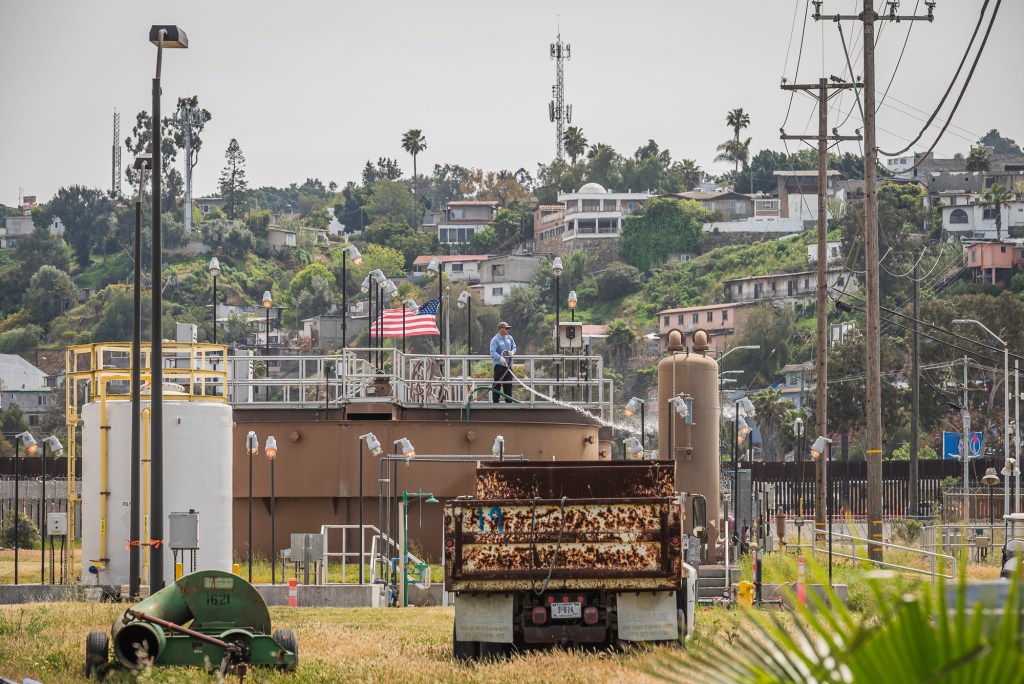
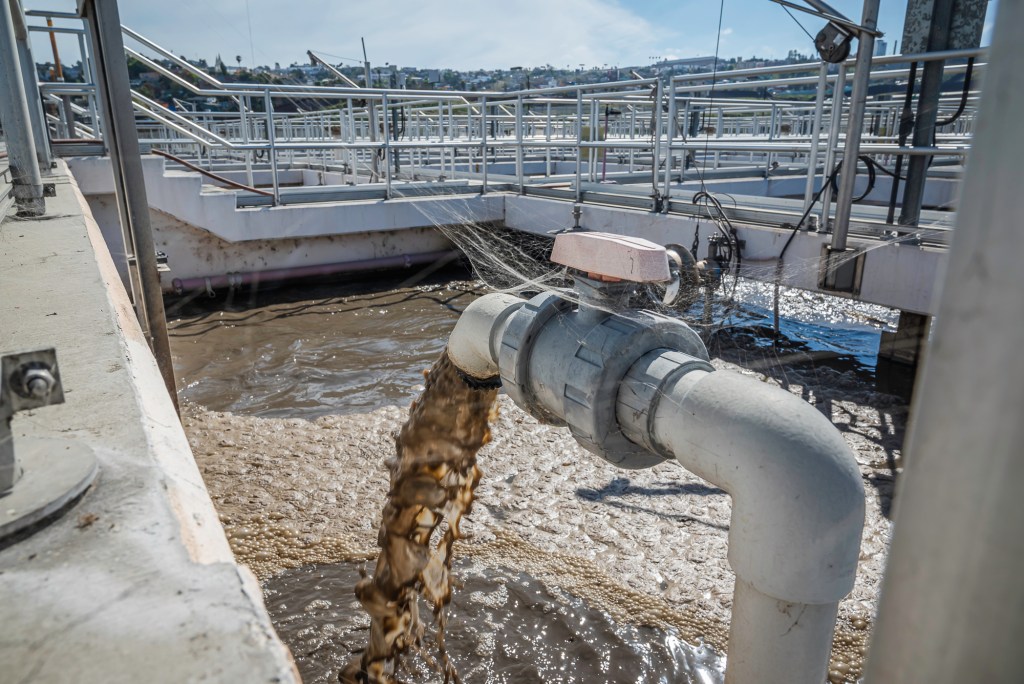
Veolia runs the plant which treats sewage sent across the border from Tijuana. But there’s often more sewage than the plant was built to treat, which means that it finds its way back into the Tijuana River. The polluted river flows through Tijuana and southern San Diego before emptying into the Pacific Ocean.
The plant typically handled 25 million gallons of sewage per day, before Trump’s Environmental Protection Agency fast-tracked expansion of the plant’s capacity by another 10 million gallons per day last fall.
Residents are desperate to resolve this decades-long pollution problem but have little recourse to hold Mexico – or the U.S. federal government, for that matter – legally responsible.
Their latest attempt seeks to hold Veolia responsible for the contamination by alleging the company failed to prevent the plant from violating the Clean Water Act. The company was sued by San Diego Coastkeeper, the Coronado Unified School District and residents of Imperial Beach, who live with constant beach closures because Mexican sewage makes its way to their shorelines via the Tijuana River.
Many of these same groups have also sued the federal government in the past, specifically the IBWC. The parties settled after the IBWC agreed to do a laundry-list of new tasks like assist Mexico in building barriers across the river to keep sewage from flowing into San Diego.
Coastkeeper has tentatively reached a settlement, according to federal court records. But a judge recently ruled a motion by Veolia’s lawyers to dismiss the cases filed by Imperial Beach residents and the school district was moot because the plaintiffs filed an amended set of complaints against the company on May 13.
The lawsuit filed by Singleton Schrieber alleges that Veolia’s contract only required the company to pay for fixes to the plant under $100,000. There’s no incentive then, Attorney Knut Johnson argues, for the company to make major repairs.
“We think that plays a strong role in why things keep breaking down,” Johnson said.
“Plaintiff counsel firms like Singleton Schrieber and Frantz Law Group use the media to attack Veolia’s reputation, in San Diego and in other cities where Veolia does business, in hopes of obtaining an early settlement, which they will not get,” Jimenez wrote.
Jimenez said the company’s contract with the IBWC requires the federal government’s approval to make major repairs that cost more than $100,000.
“Veolia has repeatedly recommended such repairs and replacements to IBWC, which was often unable to make such repairs and replacements due to lack of funding,” Jimenez wrote.
The IBWC owns the plant, which Mexico half paid for under a treaty between the two countries. Typically it takes an act of Congress to appropriate money toward the plant, and other border water infrastructure the government manages, which has proved politically difficult.
Clarification: A federal judge ruled Veolia’s motion to dismiss the case was moot because the plaintiffs suing the company had filed an amended complaint. The judge didn’t deny the motion to dismiss outright.
Start getting paid every month Thousands Dollars online.
💵 Earn $120+/hr | 🌍 grab it before it’s gone!”
TEB ON my name and read more