
This post has been updated.
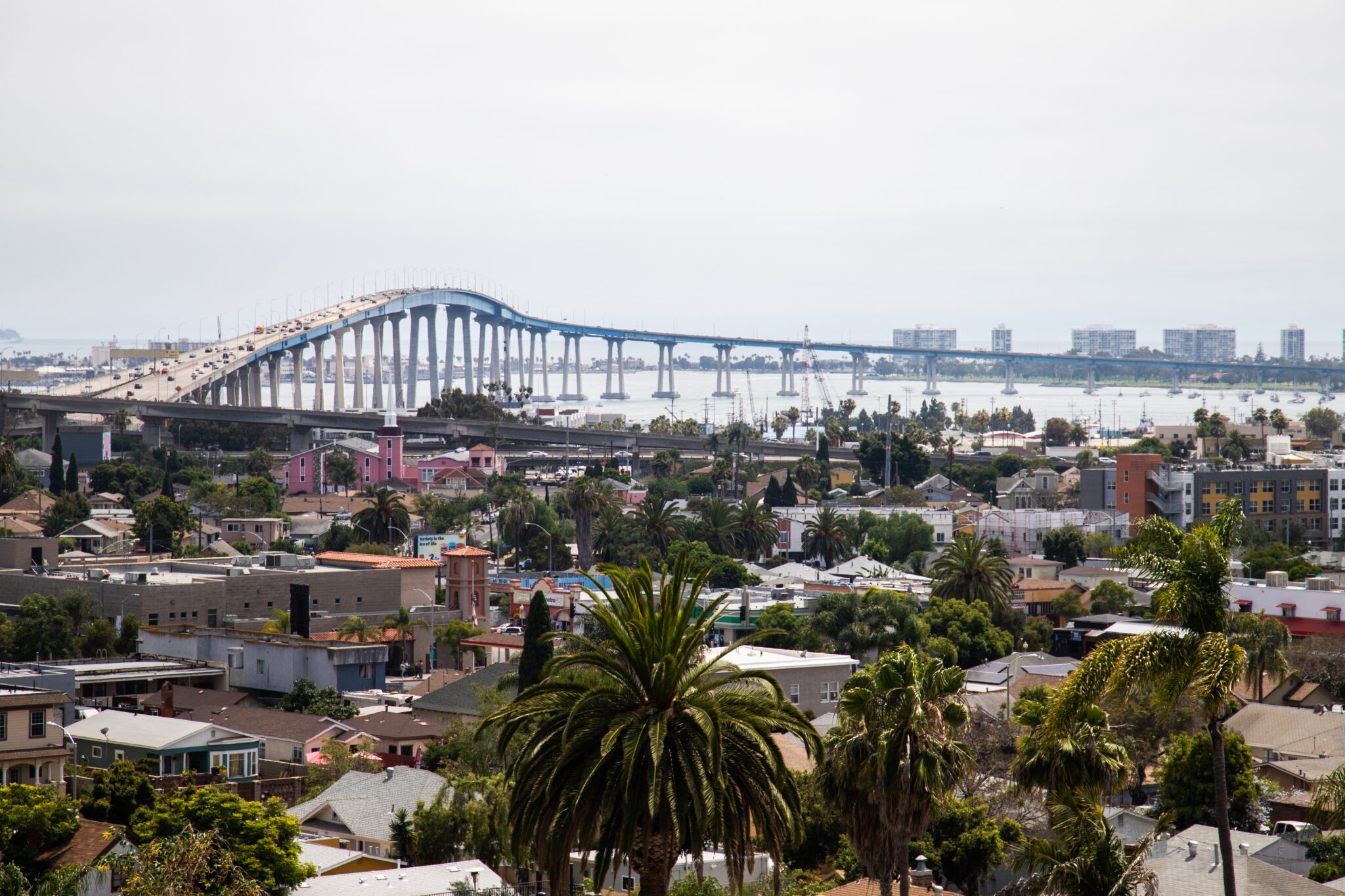
On June 14, Coronado police sent a warning to residents: Expect traffic on the San Diego-Coronado Bridge due to a mental health crisis.
The notification was one of four such alerts police have sent since the start of 2026.
On that day, officers transported the person in crisis to a hospital for evaluation and treatment, a California Highway Patrol officer said. That incident ended safely, but others have not.
Since the bridge opened in 1969, more than 470 people have died by suicide, according to data from the San Diego County Medical Examiner’s Office.
Caltrans recently secured a permit to build a long-awaited barrier to prevent suicides on what is now the country’s deadliest bridge. The transportation agency also plans to replace all cameras on the bridge and install 20 that will use artificial intelligence technology as part of the $145 million project.
The 8-foot vertical steel wire mesh barrier will span the entire length of the bridge along both sides of the bridge’s 34-inch concrete guardrails. The barrier will be supported by 8-foot-tall posts and secured by tension cables.
At its June meeting, the California Coastal Commission approved the permanent barrier design after a staff report recommended the design was the “least visually intrusive.” The approved barrier is 87 percent transparent and preserves views of the bay, according to the report.
The commission’s approval requires implementing a “Visual Mitigation Plan” that proposes improving views of the bay for pedestrians by reducing the height of a fence at the Bayshore Bikeway in Coronado and adding new murals in Barrio Logan.
Aside from the physical barrier, Caltrans spokesperson Aaron Hunter said, the AI cameras will detect unusual activity on the bridge and automatically notify the CHP and Caltrans.
Caltrans would not confirm whether the AI cameras on the bridge will work like the ones at the CHP LA Communications Center. Those cameras detect pedestrians and stalled vehicles to help prevent accidents before they happen.
Steve Welborn is a public affairs manager for Caltrans. He said the state agency is still in the design phase and has not executed a contract for the AI tech yet.
“The technology may be used to monitor the bridge,” he said, but added that since details are still being worked out, it would not be accurate to say the cameras will be used to prevent suicides.
Up until last year, San Francisco’s Golden Gate Bridge was the deadliest in the country, but since officials installed suicide prevention nets, suicides have dramatically decreased by 72 percent.
The Coronado Bridge is now the deadliest suicide bridge in the United States, said John Austin, a general surgery resident and trauma researcher at UC San Diego, who analyzed bridge mortality on the Coronado Bridge before and after Caltrans added metal bird spikes to keep people from jumping. The study found that Caltrans officials knew about the need for a permanent barrier to prevent suicides, but installed call boxes and metal bird spikes instead.
“This ineffective, underinformed public policy decision—made without significant input from healthcare stakeholders or experts—cost $420,000 and has failed to reduce the suicide rate since its installation,” the study reads.
Dr. Jennifer Lewis, a University of Southern California professor and mental health clinician who lives in Coronado, said it’s painful that Caltrans didn’t install the barrier sooner.
She said some residents have witnessed a suicide and have felt helpless waiting for a solution.
“Our community has become traumatized,” she said. “We have secondary trauma.”
Hunter, the Caltrans spokesperson, said it has taken the agency years to add a permanent effective barrier to the Coronado Bridge because of engineering difficulties, lengthy environmental reviews and planning, and plans to construct a walkway under the bridge that will be used for maintaining it.
“It’s a unique project for Caltrans because we normally don’t do these types of projects, we’re maintaining roads and repairing pavement,” Hunter said. “The bridge is a unique design and there were a lot of things we had to look at in order to make this happen.”
Documents further detail the project is scheduled to begin in October and will work in two phases that will each take a year to complete. Phase one involves adding the vertical barrier, new cameras on existing light posts and signage on the northbound side of the bridge. Phase two will cover the southbound side.
‘Something Was Kind of Nothing’
In 2018, the California legislature attempted to fast-track the funding, design and construction of the permanent physical barrier on the bridge by passing SB 656.
The legislation fast-tracked the funding, design and construction of a permanent barrier. It also established an advisory committee to advise the agency on an effective suicide deterrent system.
Professor of Surgery at the UC San Diego School of Medicine, Dr. Amy Liepert joined the Caltrans Advisory Committee in 2019. She was there representing the trauma center’s surgical team as a UC San Diego Health Surgeon that treats individuals who survive falls from the Coronado Bridge. Her motivation to fight for a permanent barrier, she said, came from witnessing the pain of a grieving mother of a teenager who died after surviving the fall.
“Ten years is a very long time in the making, and it’s been known since the bridge was installed that this needed to be done,” Liepert said.
Liepert co-authored the study with Austin and 11 more San Diego trauma surgeons, general surgeons and surgery residents that found that the measures taken to prevent suicides on the Coronado Bridge up until now have been completely ineffective and expensive.
The “San Diego-Coronado Bridge Case” study, published in May, found that there was no decrease in suicides after Caltrans installed call boxes and a bird spike barrier. Caltrans could not provide a cost for the call boxes, but said the bird spike barriers cost $420,000.
“It’s frustrating that with well-meaning intentions, there was a waste of public dollars for very ineffective solutions,” she said.
Austin, the UCSD Trauma resident and co-author of the study, said the study was necessary to quantify the public health issue trauma surgeons witness and process in the trauma bay at the Hillcrest Medical Center. Every person who jumped, on average, still had 28 years ahead of them, he said.
“I hear people say, ‘Something is better than nothing,’ but something was kind of nothing in this particular case,” Austin said.
Over the years, trauma surgeons have seen younger, physically able persons, and more military servicemembers among people who jump from the bridge, Liepert said.
Coronado resident and retired firefighter Wayne Strickland created the Coronado-SD Bridge Suicide Prevention Facebook group to share his advocacy efforts in 2019, a year after he told the Voice of San Diego he was disappointed to see bird spikes over a fence deterrent.
“It breaks my heart that it wasn’t done sooner so that these lives wouldn’t have been lost. If they would have built the bridge with the fence or vertical net, it would have saved hundreds of lives. Over 500 lives have been lost and it would have been all preventable,” Strickland said.
His posts to the Facebook group in support of a permanent barrier get comments from opponents of the project who argue that a person in crisis will “just find another way.”
But studies have proven that the theory isn’t true, said Johns Hopkins Professor and Director of the Anxiety Disorders Clinic Dr. Paul Nestadt who co-authored a 2022 study that showed that people don’t just go somewhere else to commit suicide when they’re deterred by a permanent barrier.
In Washington, D.C., when an anti-suicide fence was installed on the Duke Ellington Memorial Bridge in 1986, suicides decreased 90 percent, despite being just feet from another lethal jump site. Suicides at the site nearby did not increase.
Nesdat treats suicide survivors and researches access to suicide. He said every person in his care right now is grateful to be alive and does not want to die.
It’s like finally, prayers have been answered, said Raquel Nelson, a San Diego resident who lost her late husband to suicide on the bridge in Feburary 2014.
Brandon Nelson was a positive person and always wanted to help everyone, but he struggled more than people knew. He was having a mental health crisis when he drove himself to the bridge.
Raquel arrived while he was still there, but crisis teams kept them apart. There was no barrier to stop him.
“It couldn’t save our loved one’s life … but it gives me hope other lives can be saved,” she said.
Correction: This post has been updated to correct that Dr. Jennifer Lewis is a professor at the University of Southern California.