
Sacramento Report Countdown
3 days until the end of the legislative session
67 days until the November election
No Shock Gloves for ICE, Dems Say
Beep beep. More gut-and-amends are coming your way this week as lawmakers scramble to ram through new bills ahead of their Monday midnight deadline.
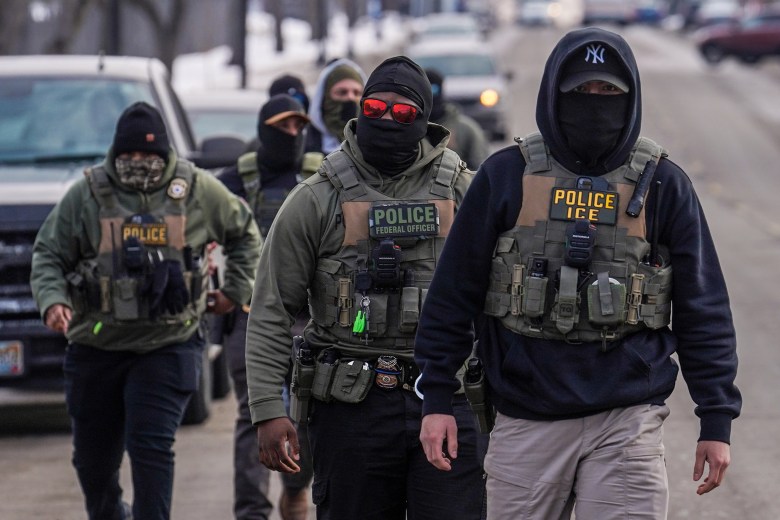
A San Diego lawmaker is leading an eleventh-hour push to ban immigration enforcement agents from using electric shock gloves in the final hours of session after U.S. Immigration Customs and Enforcement notified the Department of Homeland Security earlier this month that it plans to spend up to $20 million for the gloves. It’s California Democrats’ latest move to curb federal immigration authorities amid President Donald Trump’s sweeping crackdown.
La Mesa Assemblymember LaShae Sharp-Collins, a Democrat, introduced Assembly Bill 2760, which seeks to ban local and federal law enforcement officials from using gloves designed to deliver painful shocks. Democrats advanced the proposal this week after they stripped an unrelated bill last week and replaced it with the new measure.
In an interview, Sharp-Collins said the gloves are a novel device that carry risks the public doesn’t fully understand yet, and banning them is the only recourse.
“We’re going to do everything we can to protect and serve our communities so they feel safe,” she said.
Immigration and civil rights groups in and beyond San Diego are backing the proposed ban, which they say will outlaw an “inhumane weapon.”
“There is no circumstance to justify a law enforcement officer to utilize these wearable electroshock devices that would let them inflict pain by simple touch,” ACLU California Executive Director David Trujillo said at a Thursday press conference. “These devices should terrify everyone.”
San Diego County Supervisors Terra Lawson, Monica Montgomery Steppe and Paloma Aguirre, all Democrats, are also supporters.
Law enforcement groups, not so much.
A litany of police organizations are lined up against the bill, including the state’s sheriffs’ and police associations. Opponents say the gloves are non-lethal and banning them would amount to needlessly taking away a tool from officers’ toolbelt.
“An indefinite, outright ban because the federal officers are of concern is not the appropriate policy in this situation or any situation,” California police chiefs association lobbyist Jonathan Feldman said at a hearing this week.
Republican Sen. Kelly Seyarto of Murrieta was alone in his opposition to the bill at this week’s Senate Public Safety Committee meeting.
When immigration raids swept across the country last year, Democrats quickly moved to pass bills targeting ICE practices despite clear legal questions about their authority to do so. A 2025 law that forced masked immigration agents to identify themselves was struck down by a federal court in April.
Sharp-Collins said she’s not worried about whether or not her bill is constitutional and if it’ll be challenged in court should it become law..
“It could be challenged, that’s fine,” she said. “But at least it’s something that we know that we have put out there to let people know this is something that California’s not going to stand for.”
Experts believe such a move is likely to meet the same legal fate as the 2025 law.
“California can’t tell ICE how to do its job,” because federal law supersedes state law, University of the Pacific law professor Leslie Jacobs said. “Does California have the authority to stop ICE practices? I think they just generally don’t,” she said.
Read more in my latest story for CalMatters.
Final Stretch on Midway Negotiations

After lingering for weeks, a watered-down version of San Diego’s original Midway Rising deal got the final OK from lawmakers this week. Senate Bill 958 by San Diego Sen. Akilah Weber Pierson, loosens environmental rules around building height in response to a January court ruling striking down a ballot measure that sought to circumvent a local height cap. Gov. Gavin Newsom has until Sept. 30 to sign or veto the bill.
San Diego Assemblymember Carl DeMaio, a Republican, joined four other lawmakers — two Democrats and two Republicans, in voting no.
“This project was pushed through with very little oversight, and it overturned the people’s ordinance that established a height limit in San Diego,” DeMaio said on the Assembly floor. “We want our beautiful coastline not to be walled off. We don’t want to be the Miami Beach of the West Coast.”
Nineteen other lawmakers, including 17 Democrats, didn’t vote on the controversial legislation. Democrats will typically abstain rather than vote outright against a bill they oppose to avoid offending colleagues. Among them were two San Diego lawmakers: Assemblymember Tasha Boerner and Assemblymember Darshana Patel.
Boerner, who represents parts of the Midway District, was not made available after multiple interview requests.
About two weeks ago, Weber Pierson began distancing the project from the bill after she introduced a separate, last-minute deal to shield the development plan from environmental lawsuits under Senate Bill 344.
While it has stirred up plenty of controversy in San Diego, there was nary a vocal critic of the new deal at a public hearing on Thursday.
“This is something that definitely needs to be done. It is something that the city has been trying to do for a very long time,” Weber Pierson said at the hearing. The new deal won’t stop people from suing, but will help to not delay the project “for another five years,” she said.
Democratic Assemblymember Al Muratsuchi of Torrance grilled Weber Pierson on the proposal, asking her if there was precedent for what officials were seeking to do by using an existing environmental review of the project to comply with state environmental rules. Weber Pierson said, no, there isn’t.
“I’m just concerned that this process is being used for something that should be left to the courts,” he said.
The bill advanced from committee without support from Muratsuchi and Assemblymember Damon Connolly, a San Rafael Democrat, who didn’t vote on it.
Also: CARE Court Reform
And, finally, a proposal to make it easier for first responders to refer people with severe, untreated psychotic conditions to CARE Court passed on Friday.
That bill – Senate Bill 989 by Democratic Sen. Catherine Blakespear of Encinitas – would allow first responders to ask counties to review and file CARE petitions seeking services for people they believe could qualify for the civil court system meant to connect patients with care, housing and other services.
CARE petitions can be time-consuming and require information unavailable to police and firefighters. Data presented during a state CARE Court working group also showed petitions from first responders, crisis responders and outreach workers were more likely to be dismissed than those filed by other petitioners.
Blakespear’s bill aims to help address those issues.
“By working with county health departments and established systems of care, this bill will reduce barriers to access for patients and ensure that firefighters can most effectively support those who need it most,” said Darrell Roberts, president of the California Professional Firefighters, in a statement.
SB 989 is the less controversial piece of Blakespear’s push for CARE Court reforms after another bill that would have allowed courts to order mental health evaluations for people struggling in the program got spiked in a spending committee earlier this month.
One more thing … We’re also following talks between Chula Vista Assemblymember David Alvarez and Napa state Sen. Christopher Cabaldon to push through a compromise between their two bills seeking to allow community colleges to offer more baccalaureate programs. While Dems love these policies, Newsom has spiked similar versions in recent years over concerns about competing offerings from the University of California and California State University systems, who are major opponents of such changes.
What I’m Reading Now
Driverless cars, anyone? State regulators approved Waymo to begin picking up passengers in San Diego later this year, The San Diego Union-Tribune reports. One of their reporters takes a ride.
The Trump administration is in talks to parcel out parts of Yosemite National Park to a private developer, NOTUS breaks.
Thank you for reading this week’s report! Please reach me at nadia@voiceofsandiego.org for any questions, comments or feedback.
Voice of San Diego’s Lisa Halverstadt contributed to this report.
This is an important discussion about the use of force and the concerns surrounding electric shock gloves. I appreciate how the article brings attention to a serious policy issue and encourages readers to think about how these practices affect people. https://www.annettekmazzone.com/