

It was a busy week in South County politics. And I’m noticing a rising level of tension among regional leaders, even over routine matters.
It’s an election year, which might explain the jockeying. Or maybe tight budgets and an uncertain economy have everyone on edge.
Whatever it is, everything, no matter how small, seems to turn into a battle these days. Here’s a rundown of some notable recent skirmishes.
Hefty Raises, Round Two
Despite a recent volcanic eruption of citizen anger over a scuttled proposal to raise salaries for Chula Vista City Councilmembers by 70 percent, trustees for the Chula Vista Elementary School District last week voted to award themselves an even bigger raise – 300 percent.
Starting Sept. 1, monthly stipends for trustees of the 28,000-student district will increase from $750 to $3,000 under a new pay scale approved by trustees at their Aug. 12 monthly meeting.
Trustees Francisco Tamayo, Jessica Tolston and Lucy Ugarte voted for the raises. Trustees Delia Dominguez Cervantes and Keren Ramirez Dominguez voted against.
The raises, which will increase the amount the district spends on annual school board compensation to $223,000, come at a time when the district nearly had to lay off teachers earlier this year to ease a budget crunch.
Once the raises take effect, Chula Vista Elementary trustees will be among the highest paid in San Diego County, earning a third more than trustees in the much larger San Diego Unified School District.
Tamayo, who is also running for Chula Vista mayor this year, said the raises came in response to a new state law passed last year that lifted a decades-old cap on school trustee pay.
Chula Vista Elementary trustee stipends haven’t changed since 1984, Tamayo said — “[when] I was four years old.”
Tamayo pointed out that other South County districts, including the Sweetwater Union High School District and the South Bay Union School District, also recently increased trustees’ pay.
Chula Vista, Tamayo said, is in better financial shape than some of those districts. Over the past year, he pointed out, South Bay Union has moved to close schools and laid off staff in response to a multimillion-dollar budget gap.
Chula Vista was able to avoid teacher layoffs this year, Tamayo said. And the board waited until district finances improved before voting on the raises, he said.
“[Chula Vista Elementary] trustees are regularly responding to district updates, working through parent concerns, visiting school sites and engaging directly with state legislators,” Tamayo said in an email. “That workload, more than any single benchmark, is what the board weighed in choosing the statutory maximum [raise].”
District critics pounced anyway.
“What was the justification?” district watchdog Bertha Lopez wrote on Facebook. “What happened to public service?”
“If people don’t start paying attention, South County will become a poor community with rich elected [officials] and no community services,” wrote Nadia Ayub, also a critic of the three-member majority who voted for the raises.
Homelessness Dustup

A seemingly routine vote Tuesday on a homeless services agreement between Chula Vista and Imperial Beach also became a source of unexpected dispute.
The agreement approved by the Chula Vista City Council enables homeless people in Imperial Beach to use homeless services provided by Chula Vista, including a 65-bed tiny home shelter and a rental assistance program.
Imperial Beach, a small city without its own homeless shelter, will reimburse Chula Vista for the cost of serving I.B.’s homeless population.
“Homelessness is a regional issue,” said Mayor John McCann, explaining his support for the agreement.
Two current City Council candidates – Angelica Martinez and Greg Martinez – immediately voiced objections. The agreement, they said, risks overextending Chula Vista’s resources.
After the vote, City Councilmember Michael Inzunza, who frequently spars with McCann on the Council dais, voiced even stronger criticism.
“Chula Vista has serious homelessness problems, with over 400 people on the streets or in and out of shelters,” Inzunza said in a statement to Voice of San Diego. “Inviting homeless residents from other cities is short-sighted and will increase crime all over the city…It is not our responsibility to become the center for homelessness in the South Bay.”
McCann, before the vote, took a more positive view. He pointed out that Chula Vista’s unsheltered population declined by 25 percent in the most recent regional count.
“Our strategy has worked,” he said. “I have high confidence in our homeless team…in making sure we’re able to manage [the agreement with Imperial Beach].”
Big Race for a Small Seat
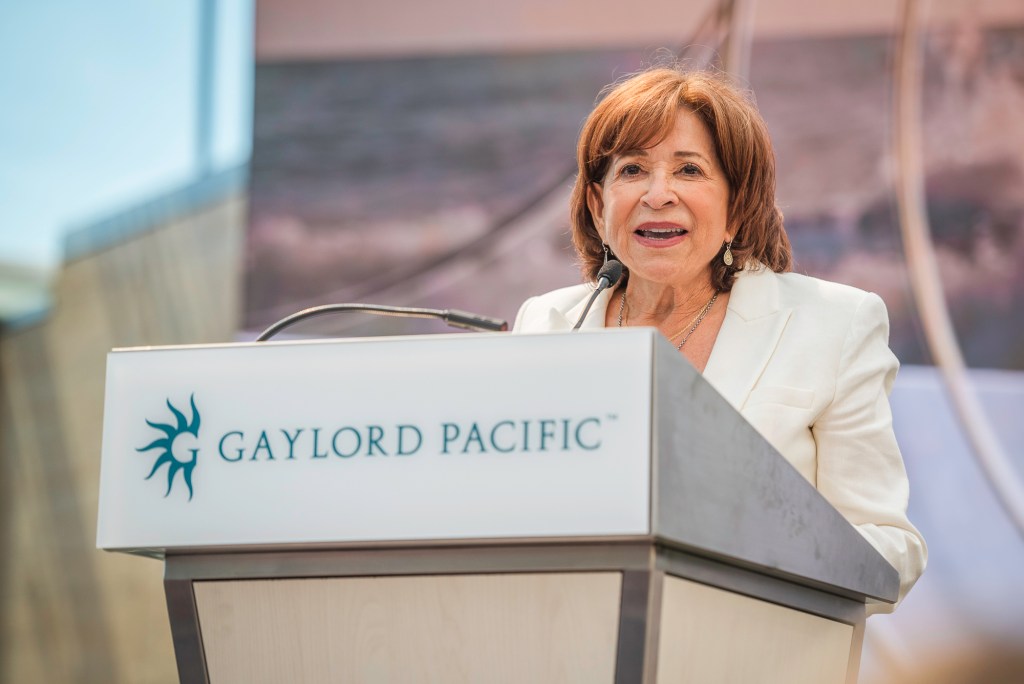
Contests for seats on community college governing boards usually don’t attract a lot of attention.
But local politicos sat up when former Chula Vista Mayor and State Assemblymember Mary Casillas Salas announced last month she would challenge Southwestern College Governing Board member Robert Moreno for his seat on the five-member board.
Salas, herself a Southwestern graduate, said she entered the race because she feels her decades of experience in state and local government – including on a statewide community college governing board – will help Southwestern navigate the increasingly complex landscape of higher education in South County.
“My real passion is to [help guide] the next steps of visioning with Southwestern College that will allow for four-year degrees and make sure there’s a pipeline for all students,” she said. “I want to make sure every student has the same opportunity I did.”
Salas said she has nothing against Moreno, who works in the San Diego County Office of Ethics and Compliance and won election to the Southwestern board in 2022.
“I don’t want to run against anyone,” she said. “It’s not a political thing for me.”
The race seems to be getting political anyway.
Moreno, who said he, too, is working to support Southwestern’s move into four-year degree programs, immediately complained to the San Diego County Registrar of Voters that Salas’ requested ballot designation — “Retired Mayor Chula Vista” — was inaccurate because Salas did not retire. She was termed out of office.
Salas said the Registrar approved the designation.
Salas’ campaign team then made its own move. On Monday, a Salas representative formally asked members of the Democratic Party’s South Area Caucus to rescind the party’s endorsement of Moreno and reopen the endorsement to other candidates.
Asked about the move, Salas downplayed her involvement.
“I thought about doing that but then didn’t do it,” she said. “I was encouraged by some folks to do it.”
Salas was present for a portion of Monday’s online caucus meeting but appeared to have signed off by the time the agenda item for the endorsement request came up.
A Salas campaign representative handled the request. After a short discussion, meeting participants voted 16-14 to deny the request and keep Moreno’s endorsement.
“I’m still proudly the endorsed candidate of the Democratic Party for my race,” Moreno said.
“Mary Salas has a respectable legacy,” Moreno added. “But I’m doing a hell of a job on the Southwestern governing board [and] everyone sees that…I’m taking the college in the right direction.”
Salas said people have asked her, “Why do you want to do this? You’ve been mayor.”
“It’s not about the title,” she said. “It’s about getting the vision [of bringing a four-year university to Chula Vista] done and accomplished…I never lost faith it’s going to happen. It’s just a matter of time.”
Start getting paid every month Thousands Dollars online.
💵 Earn $120+/hr | 🌍 grab it before it’s gone!”
TEB ON my name and read more
Mary Salas served as A Councilmember and Mayor for 18 years, why didn’t she help with bringing a 4 year university then?