
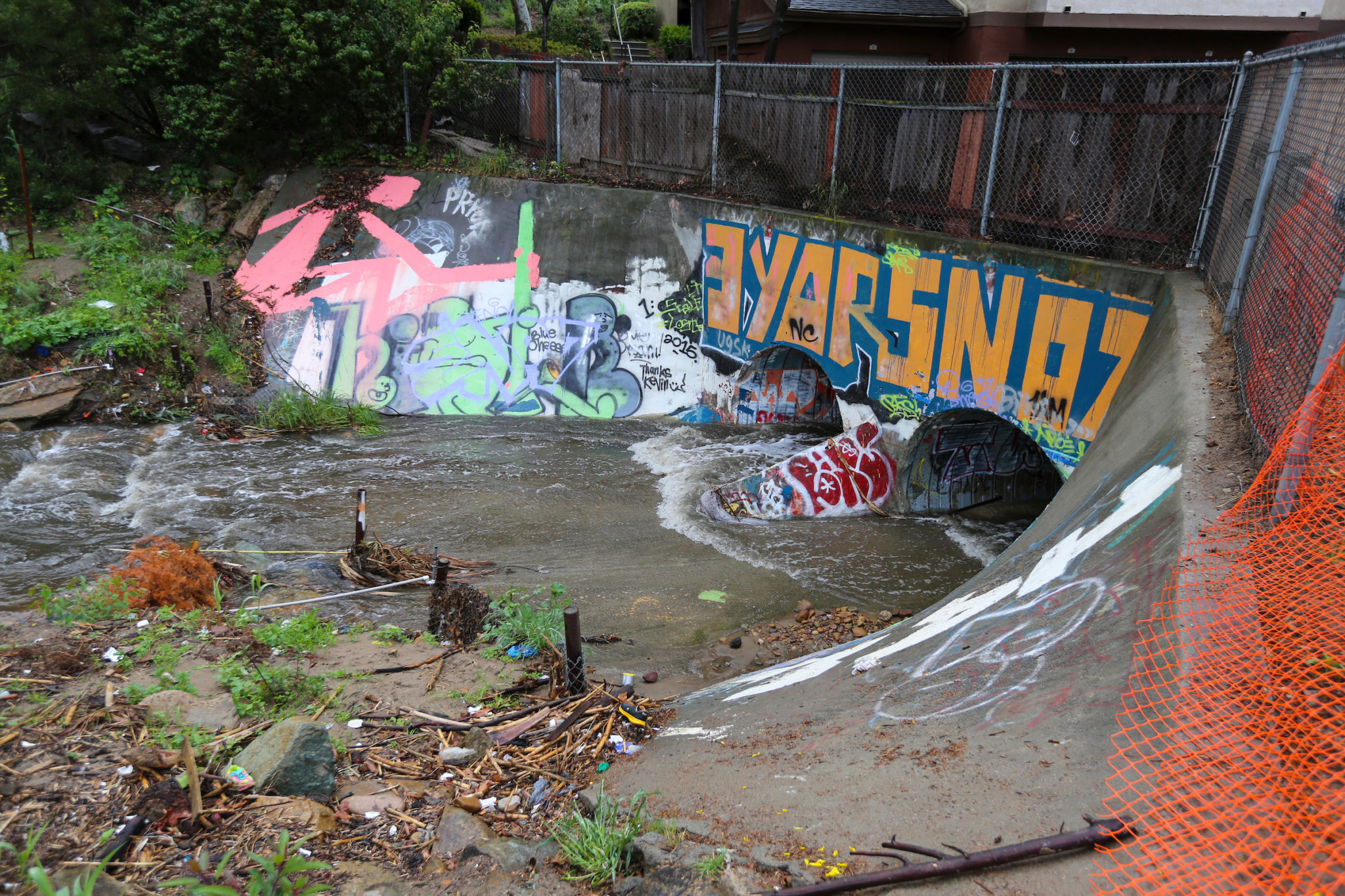
It’s no secret the city of San Diego is short on cash – and the backlog to fix critical infrastructure keeps growing.
That backlog includes basic infrastructure like stormwater channels, roads, streetlights and more. According to an IBA analysis of the city’s capital outlook, the city needs $12.8 billion for infrastructure needs over the next five years.
But city officials have only identified $5 billion to fund the need, leaving a capital funding gap of $7.8 billion. Currently, stormwater needs make up 65 percent of that gap.
The City Council already had to make deep cuts to balance this year’s general fund budget. How they’ll tackle infrastructure funding – especially after public backlash over other revenue-generating measures like trash and parking fees — remains a key question for the city’s fiscal stability.
The makeup of the City Council could change with the upcoming elections, so I asked candidates what they would do to secure money for the city’s infrastructure backlog and whether they’d support any new taxes.
New taxes definitely aren’t popular among the candidates. Several candidates proposed applying for state and federal grants to plug the gap. Some candidates also proposed independent audits on the city’s budget and contracts to understand where the city’s current money is going. One candidate said the city needs to spend the taxes it already collects more efficiently.
Former Republican Richard Bailey said he wouldn’t support any new tax or fee increases. Bailey is running against Nicole Crosby to represent District 2, which runs from Pt. Loma to Clairemont.
“The city brought in an all-time high record amount of tax revenue this fiscal year, so it’s not a question of whether we need higher taxes but rather spending the taxes we already collect more efficiently,” he wrote over text.
He didn’t detail how he would ensure City Hall spends existing taxes more efficiently.
Crosby, said the city needs to tap into state and federal dollars – an idea she says Bailey consistently calls a waste.
“My opponent is always saying — asking the state or federal government for assistance on infrastructure is a waste, but it’s absolutely not a waste because we as California taxpayers pay huge sums to the state and federal government,” she said.
She said the city should rely on that money to improve infrastructure.
I went back to Bailey to get his response on Crosby’s comments. He said a plan that relies on federal and state governments to bail out the city is no plan at all.
“Expecting the state and federal government to bail out the city’s gross financial mismanagement demonstrates a fundamental misunderstanding of how local, state, and federal tax dollars are typically allocated,” he wrote.
Democrat Gerardo Ramirez is running against fellow Democrat Antonio Martinez to represent District 8, which includes southern neighborhoods like Barrio Logan, Tijuana River Valley, San Ysidro and Nestor.
He’s on the same page as Crosby and supports tapping federal and state grants. He said an audit on the city’s grants program in 2025 found the city could be getting more money.
“We gotta make sure we’re not leaving those [grants] behind because again, we’re just leaving money at the table,” he said.
Martinez said he would also pursue federal and state grants and work with the county to close funding gaps on infrastructure projects.
Candidates are generally hesitant about a new tax and would consider other options to solve the city’s budget gap first.
Crosby added that she wouldn’t consider a new tax until the city has done full audits on its contracts, brings all its real estate leases to fair market value or gets millions more in grant money.
“We should not be rubber stamping contracts,” said Crosby. “We need to figure out what kind of due diligence is done.”
Ramirez also thinks overspending on contracts, particularly for emergency repairs, is an issue and he would like to push for an audit. Ramirez said in 2024 alone the city spent more than $50 million on emergency repairs on storm drains.
He said the city needs to create a maintenance plan on the city’s storm drains and storm pipes to ensure city officials know what areas need maintenance.
“Not just waiting until an emergency happens, but trying to be proactive and prevent some of those emergency breaks,” he said.
Ramirez said a new tax would be one of the main ways to fix the infrastructure backlog, but he said the city needs to be more efficient with what it already spends before he supports that.
Martinez said before considering a tax, he would want an independent audit on the city’s budget.
“The reality is what the city needs to do is know they have to prove – and really this takes time and communication – that they’re fiscally responsible in managing the budget now before we even think about a tax measure,” he said.
Democratic Councilmember Henry Foster represents District 4, which covers southeastern San Diego neighborhoods like Encanto, Skyline, and Emerald Hills. He did not respond to a request for comment.
In an interview at Politifest 2026, Foster talked about how during his tenure he’s secured federal loans for stormwater infrastructure. He said specifically in Chollas Creek, they have over $190 million available to fix deficiencies.
“My role at this present time is to make sure that we move in a streamlined fashion, work out our inefficiencies, and that we actually complete our designs in a timely fashion,” he said. “And that we get to work in the actual construction phase as quickly and as efficiently as we can.”
Foster’s opponent Democrat Martha Abraham did not respond to a request for comment.
Democratic Councilmember Kent Lee, who’s district runs from University City to Scripps Ranch, declined to comment. Lee’s opponent, Republican Mark Powell did not respond to a request for comment.